Not the institutional version. Not the political version. The human one, the one that speaks directly to the heart.
1. Living from the inside out
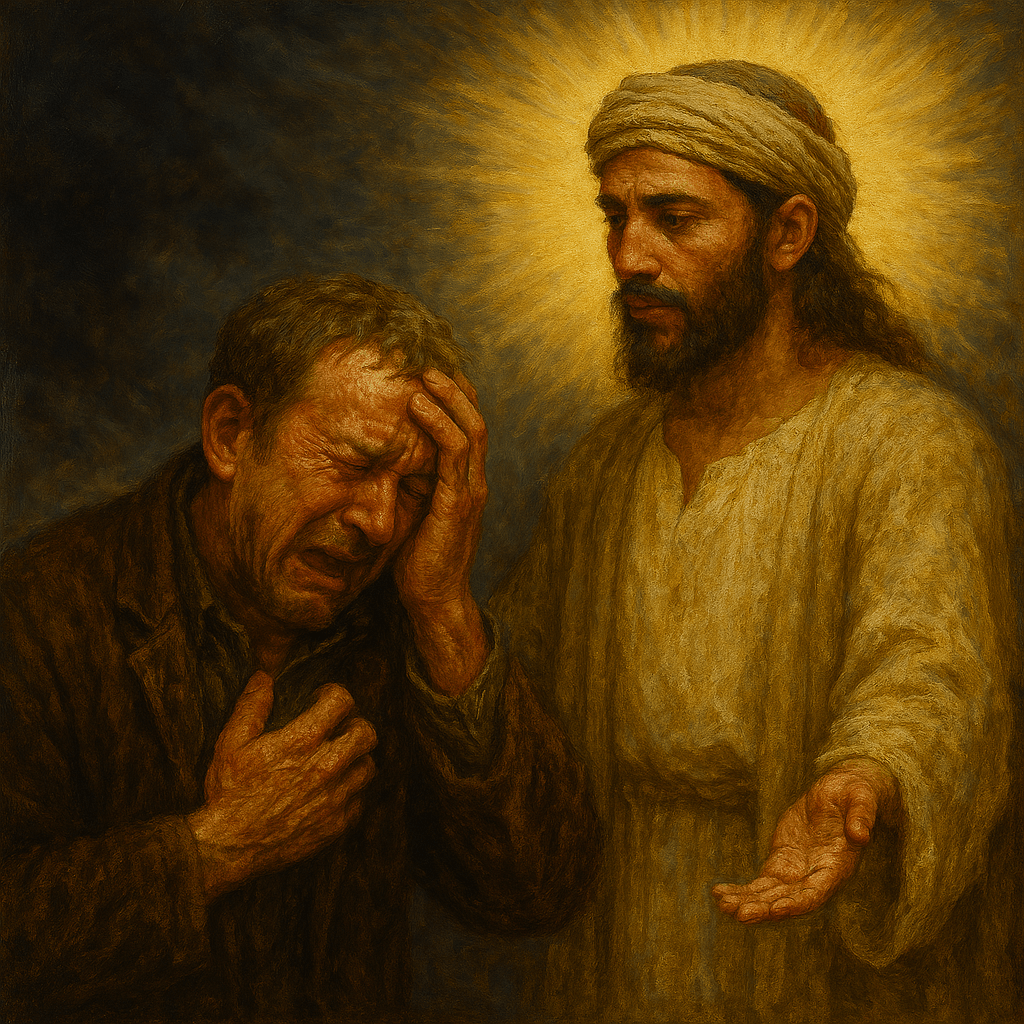
Jesus kept pointing us back to the inner life — the place where love, conscience, and clarity already live. Not to rules. Not to fear. Not to the guilt handed down through generations.
He reminded us that the Kingdom isn’t somewhere “out there.” It’s born into us. It’s the quiet guidance we arrive with.
2. Choosing curiosity instead of condemnation
We inherit two possible paths: the path shaped by shame, negativity, and the emotional debris passed down to us. Or the path that opens when we begin to question what we’ve absorbed.
Jesus always invited people into that second path. The space where gentleness replaces judgment, and where we examine the wound instead of blaming the wounded.
3. Letting love be without walls
“We meet another soul that through gentleness and understanding teaches us what love is without the defined boundaries we previously developed.” __DM
This is the way Jesus loved us, through presence, through a kind of steady warmth that dissolves the defenses we built to survive. His love wasn’t transactional. It wasn’t earned. It simply was.
4. Refusing to echo the world’s fear
Jesus didn’t pretend suffering wasn’t real. He just refused to let it shape his identity.
He met hatred with clarity rather than confrontation. He met confusion with compassion rather than superiority. He met pain with presence rather than avoidance.
He showed us that fear doesn’t have to be the life we sadly hold and endure.
5. Healing by seeing clearly
He never asked anyone to hide their wounds or carry their sorrow. He asked them to see it, and then to recognize that they were more than the pain they carried.
A Simpler Way
To live as Jesus wanted is to live in a way that:
softens instead of hardens
questions instead of accusing
loves instead of hates
sees instead of judges
frees instead of binds
It’s not about getting it perfect. It’s about the direction your heart keeps turning toward, again and again, even after you’ve been hurt.
In a political moment where apocalyptic language is being invoked with startling casualness. Where leaders speak of Armageddon, divine battles, and the second coming as if they were policy tools, it becomes necessary to pause and ask what any of this would actually mean if taken seriously. Not politically, but spiritually. Not as rhetorical, but as a reality.
If there were such a thing as a deity returning to judge our humanity, I do not imagine a spectacle of destruction. I do not imagine fire, or armies, or the triumph of one faction over another. What I imagine is something far quieter and far more devastating. I believe it will be the sudden and unavoidable illumination of who we really are, a personal reckoning of sorts.
Judgment, in this sense, would not be an external punishment. It would be the collapse of every illusion we have built to protect ourselves from the truth of our own actions. Hatred, ignorance, and cruelty survive only in the shadows, where fear goes unexamined. Where stories about “the other” remain unchallenged and where people cling to identities built on opposition rather than understanding. If a divine presence were to enter that space, the first thing it would do is reveal what has always been there.
And that revelation would be painful.
The pain would not come from a wrathful deity, but from the shock of seeing ourselves clearly. It would be the grief of recognizing the harm we have caused, the smallness of the fears we mistook for convictions, the ways we allowed sorrow to turn to ignorance then into a hardened ideology. It would be the sorrow of realizing how much of our lives had been shaped by distortions we never questioned.
This is not a new idea. Across religious and philosophical traditions, judgment is often described as illumination rather than punishment. In Christian mysticism, the presence of the divine is imagined as a light that reveals everything we’ve held deeply, motives, wounds, illusions, and the consequences of our choices. In Buddhist thought, suffering arises when ignorance is confronted by insight, and awakening begins with the painful recognition of what we have refused to see. Even in secular psychology, remorse is understood as the natural outcome of clarity.
In all of these traditions, real terror is not divine anger. It is self‑recognition, a painful and devastating satori.
This vision stands in stark contrast to the apocalyptic fantasies being invoked in our current political discourse. Those fantasies imagine judgment as a battlefield, a cosmic sorting of allies and enemies. But the judgment I realize is internal, not external. It is not about who wins. It is about who finally sees.
And in that moment of clarity, those who have cultivated hatred, those who have wielded ignorance as a weapon or used fear as a tool would experience the deepest of sorrows. Not because they are being punished, but because they have finally awakened.
There is, in this vision, a strange kind of hope. If judgment is illumination, then even the most entrenched forms of hatred are not permanent. They are simply unexamined. And once they are seen clearly, they lose their power.
The question that remains is what comes after such an awakening. If hatred collapses under the weight of its own recognition, what grows in its place? Does sorrow open the door to redemption, or does it mark a turning point in the moral landscape of humanity?
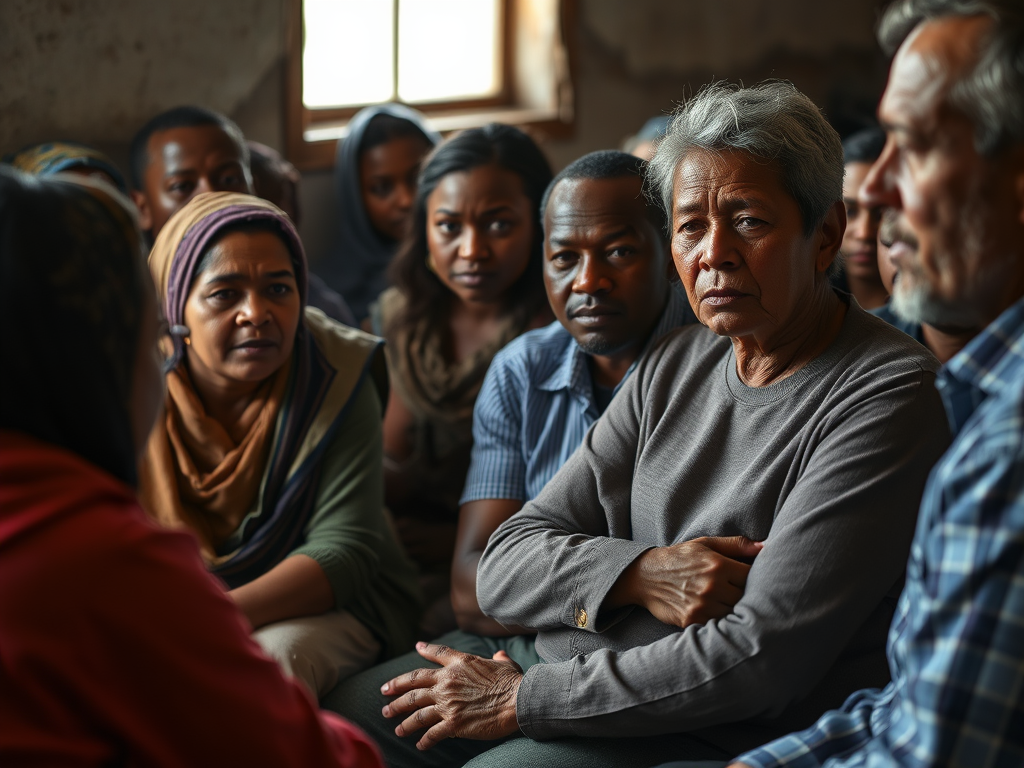
Many people today are living with a quiet but persistent ache. It is an ache born from witnessing the hatred, division, and government‑sanctioned hostility seeping into the fabric of our daily life. We counselors and therapists hear it in our offices every day: the sense that the world has tilted, that the social contract has frayed, that something essential in our shared humanity is being threatened. This is not ordinary stress. It is a form of collective wounding that touches the psyche, the body, and the spirit. It calls for a form of counseling that is both psychologically grounded and spiritually attuned.
When the source of fear or aggression comes from institutions meant to protect, the injury becomes existential. Clients often describe feeling unmoored, as if the ground beneath them has shifted. Their sense of identity may be shaken, especially if their communities are targeted or marginalized. Many experience a deep moral injury, a spiritual pain that arises when witnessing cruelty or injustice carried out in their name. Others grieve the loss of a country or a shared moral center they once believed in. This grief is not a sign of weakness; it is a sign that something sacred has been violated.
In such times, the counseling room becomes more than a clinical space. It becomes a sanctuary. It becomes a place where clients can breathe, feel, and remember who they are beneath the noise. A spiritually attuned counselor offers a presence that steadies rather than fixes. Being a witness that dignifies rather than debates. A language that restores coherence rather than amplifies fear. Simply acknowledging a client’s sorrow, saying, “It totally makes sense that you feel this way” becomes a form of spiritual companionship. It tells them they are not alone in the dark.
Political hostility often leaves people feeling powerless, but spiritual healing begins by helping clients reclaim the one domain that cannot be taken from them: their inner life. This reclamation may begin with their breath, with their body, or with the quiet recognition of values that transcend political cycles. It may take the form of meditation, prayer, silence, a long-learned ritual, or in a mindful movement. These practices that restore inner sovereignty remind clients that their humanity is not defined by the turbulence around them. Agency does not begin with sweeping political action; it begins with the ability to inhabit one’s own being with clarity and intention.
Many clients are grieving the loss of a world they believed in, and others feel betrayed by leaders or institutions they once trusted. Still others feel spiritually fractured by witnessing cruelty normalized. A spiritual approach invites clients to name their grief without rushing to resolve it, to recognize betrayal as a rupture of trust rather than a personal failure, and to explore the deeper longing beneath their pain. Rituals of release, writing, creating, burying, or speaking aloud what must be let go, can help transform grief into wisdom rather than despair.
Because political trauma is not only psychological but somatic, the body becomes a central site of healing. Chronic threat tightens the muscles, shortens the breath, and narrows the field of awareness. Helping clients return to the body as a place of refuge rather than alarm is essential. Grounding practices, slow movement, breathwork, and even simple contact with the earth can help restore a sense of belonging and safety. When the body softens, the spirit can begin to rise again.
Counselors and therapists themselves are living through the same climate as their clients, and their own spiritual grounding becomes part of the work. Counselors must cultivate practices that restore inner quiet, seek communities that nourish the heart, and maintain boundaries that protect their nervous system. A counselor who is spiritually anchored becomes a quiet beacon as someone who can sit in the storm without being swept away. This offers clients a living example of steadiness in a time of upheaval.
Clients often ask how to stay human when the world feels so inhumane. A spiritually informed response begins with the recognition that hatred is not the deepest truth of the world. Beneath the noise lies a quieter truth: connection, dignity, compassion, and the unbroken thread of humanity that runs through all of us. Even in times of darkness, the human spirit knows how to orient toward the light. Counseling becomes a place where clients can practice this orientation, rediscover their inner compass, and reclaim the possibility of living with integrity, courage, and love.
We are living through a defining and collective threshold. The work of counseling in this era is not only to soothe distress but to help people remember who they are beneath the machinery of fear. It is to help them reclaim their inner sovereignty, reconnect with their deepest values, and rediscover the quiet, enduring strength of the human spirit. In a time of division and hostility, the therapeutic relationship becomes a radical act of healing. It becomes a reminder that even when the world fractures, the heart can remain whole.
There are moments in counseling when a person reveals that they have stepped into a terrain they never imagined themselves entering. The first serious contemplation of suicide is one of those moments. It is not simply a deepening of depression or an intensification of distress. It is an existential threshold, a rupture in the continuity of one’s inner life. It becomes a moment when the psyche experiments with the possibility of ending itself. For many, this crossing is experienced not as a sole thought but as an emerging and all-encompassing moment, something that leaves an indelible mark on one’s mind and the body long after the crisis has passed.
Once a person has crossed that frightening threshold, that bleak landscape becomes known to them. It is no longer an unimaginable place but a sadly remembered one. It becomes a road that can be returned to with unsettling ease and with unexpected clarity. Some individuals come back from that edge with a deeper understanding of their own sorrow and suffering. They speak of limits they can no longer deny, of truths they had been delaying and of a new tenderness toward themselves. The encounter with self-annihilation becomes, paradoxically, a source of renewed commitment to living differently. They have seen the bottom of their despair, and in doing so, they discover a fierce honesty about what must change if they are to remain alive.
Others return from that threshold shaken and ashamed. They fear their own mind, as if it has revealed a capacity they cannot trust. They worry that the path is now carved into them, a groove they might slip into again when life becomes narrow and hopeless. Their relationship with self becomes fragile. They may feel damaged by the encounter or convinced that they are now permanently at risk. For these individuals, the threshold becomes a place of dread rather than insight, and they need help rebuilding a sense of safety within their own interior world.
In the clinical field, we are often trained to respond to suicidal ideation with urgency, protocols, and safety plans. These tools matter. They save lives. But they are not the whole story. What is sometimes missing is the recognition that the suicidal threshold is not only a crisis to be managed but an experience to be understood and integrated into a further healing and growth process. When someone tells us they have been to that place, they are not merely reporting a risk; they are revealing a profound moment in their story. Our task is to meet that moment with steadiness, curiosity, and dignity.
To do this well, we must be willing to sit with the gravity of what the person has encountered. We listen not only for danger, but also for meaning. What collapsed in them? What felt impossible to carry? What part of them was seeking relief, release, or silence? What did the threshold reveal about their longing, about their exhaustion? These questions are not only diagnostic; they are human. They help transform the experience from something terrifying and isolating into something that can be spoken, understood, and eventually metabolized into a deeper growth.
We also help the person map the terrain they have entered and experienced. Not as a checklist of warning signs, but as an intimate understanding of their own inner weather. What are the early signals that caused the road to narrow? What thoughts began to cluster? What bodily sensations arose? What relational patterns tightened or were lost to the chaos? This mapping is not about surveillance. It is about restoring agency. It allows the person to recognize the approach of despair before it overtakes them, and to reach for support without shame.
Most importantly, we accompany them as they rebuild a sense of safety within themselves. This is slow, relational work. It involves restoring compassion where shame has taken root, restoring choice where helplessness has settled, restoring connection where isolation has hardened. It is the work of helping a person trust that their life is still theirs to shape, even after they have glimpsed the possibility of an ending.
When held with presence and care, the encounter with suicidal despair does not have to remain a mark of brokenness. It can become a moment of profound self-understanding, a turning point in a person’s relationship to suffering, and a doorway into a more honest and compassionate way of living. Our role is not to erase the threshold but to help the person integrate it. It is our work to walk with them as they learn to live with the knowledge of that landscape, and to discover that returning to life is not only possible, but more meaningful.
Love and mindfulness are often treated as if they belong to different worlds, one in the realm of feeling, the other in the realm of attention. But in our true lived experiences, they lean toward each other. They keep finding their way back into the same room. When you sit with them long enough, you begin to see that each reveals something essential about the other.
Mindfulness is the clearing of unnecessary inner dialog and chatter. It is the softening of our inner weather, the loosening of the grip of control. It is the willingness to meet the moment without trying to bend it to your will. When that softening happens, love can move again. Not the sentimental kind, not the desperate grasping kind, but the quiet, directional love that knows how to breathe with ease and grace. Mindfulness doesn’t create love, but it removes the debris that keeps love from being truly felt.
And love, in turn, gives mindfulness its orientation. Without love, mindfulness can become a technique, a way of quietly stepping back and hovering above your own life. But when love is present, your attention becomes a form of care. It becomes a way of tending to what is real. Love asks your awareness to be warm, to be honest, to be willing to stay. Mindfulness keeps that warmth from drifting into fantasy or fear. Together they form a presence that is both clear and generous.
Mindfulness also keeps love from dissolving into longing or projection. Love, left unchecked, can drift into stories about what should be or what might have been. Mindfulness brings love back to the ground. It holds the simple curiosities of what is here I need to attend to. What is needed. It doesn’t diminish love; it simplifies it. It lets love be love, not wishfulness.
And love keeps mindfulness from becoming an escape hatch. It refuses the version of mindfulness that floats above feeling. Love insists on contact with the person in front of you, with the truth of the moment, and with the ache that asks to be witnessed. Love pulls mindfulness back into the relationship, reminding us that presence is not a retreat but a way of being with the world.
Together, they create a way of meeting sorrow that is neither overwhelmed nor withdrawn. Mindfulness allows sorrow to be seen without being swallowed. Love allows it to be held without being fixed. Mindfulness says, “This is what is here.” Love answers, “And I will not turn away.” This is the heart of accompaniment, the place where presence and ache sit side by side, and neither one trying to outrun the other.
In the end, love is the direction and mindfulness is the discipline. Love points the way. Mindfulness keeps our feet on the path. Love is the intention; mindfulness is the practice. When they move together, they create a way of being, steady, warm, and deeply human.



 The Journey of a thousand miles