Not the institutional version. Not the political version. The human one, the one that speaks directly to the heart.
1. Living from the inside out
Jesus kept pointing us back to the inner life — the place where love, conscience, and clarity already live. Not to rules. Not to fear. Not to the guilt handed down through generations.
He reminded us that the Kingdom isn’t somewhere “out there.” It’s born into us. It’s the quiet guidance we arrive with.
2. Choosing curiosity instead of condemnation
We inherit two possible paths: the path shaped by shame, negativity, and the emotional debris passed down to us. Or the path that opens when we begin to question what we’ve absorbed.
Jesus always invited people into that second path. The space where gentleness replaces judgment, and where we examine the wound instead of blaming the wounded.
3. Letting love be without walls
“We meet another soul that through gentleness and understanding teaches us what love is without the defined boundaries we previously developed.” __DM
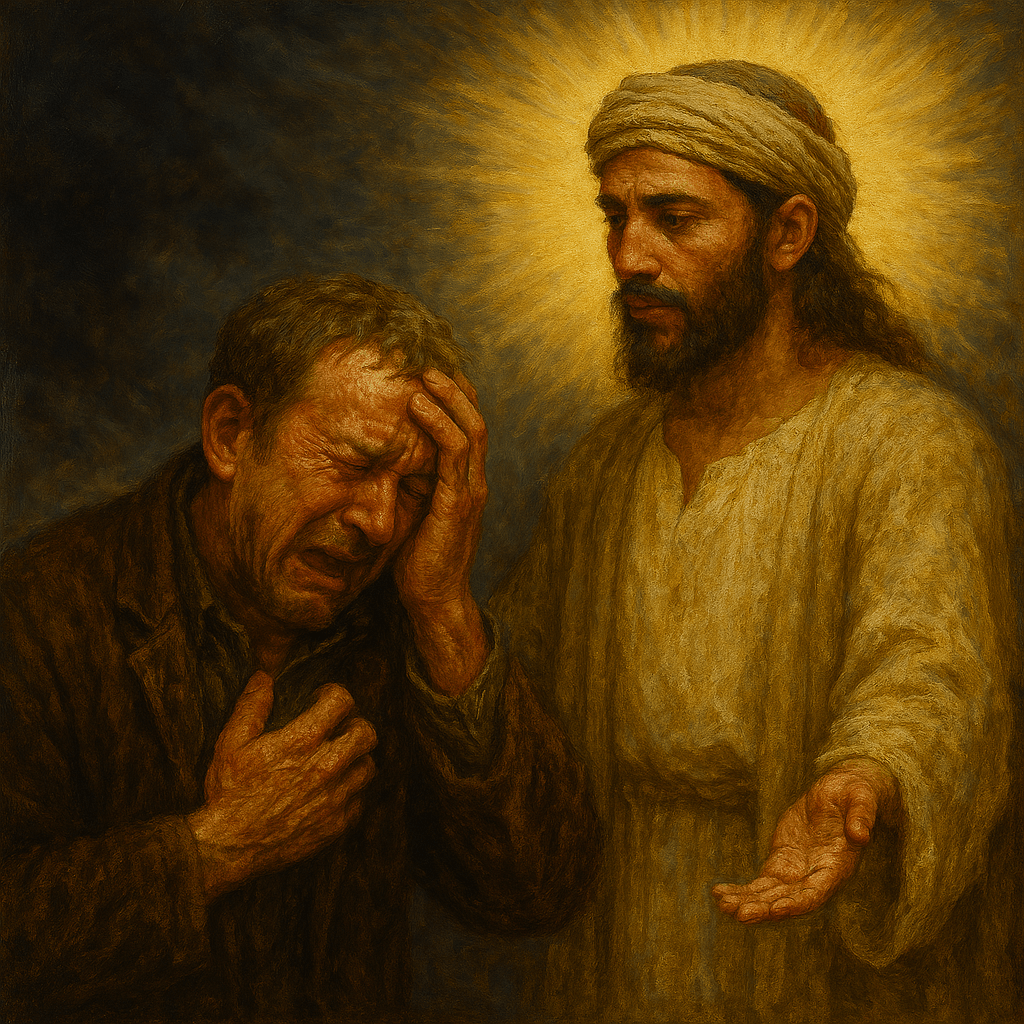
This is the way Jesus loved us, through presence, through a kind of steady warmth that dissolves the defenses we built to survive. His love wasn’t transactional. It wasn’t earned. It simply was.
4. Refusing to echo the world’s fear
Jesus didn’t pretend suffering wasn’t real. He just refused to let it shape his identity.
He met hatred with clarity rather than confrontation. He met confusion with compassion rather than superiority. He met pain with presence rather than avoidance.
He showed us that fear doesn’t have to be the life we sadly hold and endure.
5. Healing by seeing clearly
He never asked anyone to hide their wounds or carry their sorrow. He asked them to see it, and then to recognize that they were more than the pain they carried.
A Simpler Way
To live as Jesus wanted is to live in a way that:
softens instead of hardens
questions instead of accusing
loves instead of hates
sees instead of judges
frees instead of binds
It’s not about getting it perfect. It’s about the direction your heart keeps turning toward, again and again, even after you’ve been hurt.
Guilt enters the experience of lasting sorrow not as its origin, but as the quiet hinge where an inherited story begins to loosen. It arrives in that subtle moment when the heart becomes honest enough to say, I understand something now that I could not understand then. We often treat guilt as a verdict, a weight, a sign that we have failed. But guilt is rarely about failure. It is about vision. It is the first tremor of awakening inside a lineage that has been asleep for a long time. It is the moment when the fog of inherited behavior begins to lift, and we see ourselves and our patterns with clarity that was previously unavailable to us.
Guilt appears because we care. It rises only when we recognize that our actions, or the emotional reflexes we absorbed long before we had language, no longer align with the person we are becoming. In that sense, guilt is not a condemnation but a sign of moral evolution. It interrupts the momentum of the emotional inheritance we’ve been carrying and slows us down long enough to notice the gap between the life we were shaped by and the life we are trying to choose. It is the moment when something inside us whispers, this is not the inheritance I want to continue. This is not the version of myself I want to hand forward. That whisper is small, but it is powerful. It is the beginning of a new lineage.
In generational healing, guilt is often the first doorway into clarity. It is the moment when we stop moving unconsciously through the emotional architecture we inherited and begin to see the structure itself. We start to recognize the anger that wasn’t originally ours, the fear that seeped into us from someone else’s unspoken wounds, the patterns we repeated because they were the only ones we knew. We begin to see the ways our parents were shaped by their parents, and their parents by theirs. We see how survival strategies become family traditions, how silence becomes a language, how tenderness becomes rationed, how love becomes conditional without anyone ever intending harm. Guilt is the flicker of awareness that says, I see the lineage now. I see the cost of it. I see my place inside it. That recognition can ache, but it is also the beginning of freedom.
When guilt is allowed to soften, it transforms into a different kind of sorrow—not the heavy, punishing sorrow that collapses the spirit, but the clarifying sorrow that comes from finally seeing the full landscape of our own humanity. This sorrow is tender. It is the sorrow of realizing that we were shaped long before we had agency, and that we have been trying, in our own imperfect ways, to navigate what we did not choose. It is the sorrow that arises when we understand that the people who raised us were also shaped before they had agency, carrying their own unspoken griefs, their own inherited fears, their own unfinished stories. This kind of sorrow does not crush us. It widens the heart. It deepens our capacity to love, not only others but the earlier versions of ourselves who were doing the best they could with the emotional tools they were given.
If guilt stays rigid, it calcifies into a lived shame. But if it stays open, it becomes enduring wisdom. The shift happens when we realize that although we participated in certain patterns, we didn’t necessarily invent the conditions that produced them. We inherited much of the emotional weather of our families, and we moved through it without knowing there were other climates. To see this clearly is not to excuse ourselves, it is to understand ourselves. It is to say, I see what I could not see before, and now I can choose differently. That realization dissolves the sting of guilt and leaves behind a quieter, steadier compassion. It is a compassion that honors both the child who absorbed the pattern and the adult who is trying to interrupt it.
In the context of generational healing, guilt is not the antagonist. It is the threshold. It is the moment when the lineage becomes visible, when the unconscious becomes conscious, when the inherited story becomes a thing we can finally question. Guilt is the heart’s first attempt at rewriting the script. It is the emotional signal that the cycle-breaker has awakened. And once guilt has done its work, it does not need to remain. It naturally gives way to something more spacious. We develop acceptance, clarity, even a quiet gratitude for the simple fact that we can see more now than we once could.
This is the work of the cycle-breaker. An ability to feel guilt without drowning in it, to let sorrow clarify rather than crush. It is the power to recognize the inheritance without becoming defined by it. To stand at the doorway that guilt opens and choose, with as much gentleness as possible, a different way forward. To understand that the lineage does not end with us, it transforms through us. And in that transformation, guilt becomes not a burden but a blessing, the first sign that the story is finally changing.
Guilt, when viewed through the lens of generational healing, becomes something far more intricate than a personal emotion. It becomes a crossroads between what was handed to us and what we are willing to hand forward. It is the moment when the inherited story pauses long enough for us to hear ourselves think. And in that pause, we begin to sense the weight of what we’ve been carrying, not just our own choices, but the choices of those who came before us. The unspoken rules of the family, the emotional choreography we learned without ever being taught appear in a clear light.
There is a particular kind of guilt that arises when we realize we have repeated something we swore we would never repeat. It is the guilt of hearing our parents’ voice come out of our own mouth. The guilt of reacting with a sharpness we once feared. The guilt of withdrawing in the same way someone once withdrew from us. This guilt is not simply about the moment itself; it is about the shock of recognition. It is the realization that the lineage lives in us more deeply than we knew. And yet, this recognition is also the beginning of liberation, because we cannot interrupt what we cannot see.
As we continue to look more closely, guilt begins to reveal the architecture of the lineage. We start to see how our parents were shaped by their parents, how their tenderness was limited by what they never received, how their fears were inherited rather than chosen. We begin to understand that the patterns we carry were survival strategies as ways of coping with scarcity, instability, silence, or emotional unpredictability. These strategies were passed down not because they were healthy, but because they were familiar. And familiarity, in a family system, often masquerades as truth.
This understanding does not erase the harm we may have caused, nor does it absolve us of responsibility. But it does soften the edges of guilt. It allows us to hold our actions within a wider context, one that includes the generations behind us and the generations ahead. It allows us to say, I see the pattern now. I see how it moved through me. And I see that I have the power to interrupt it. This is the moment when guilt begins to transform into something else, something steadier, something more spacious.
The sorrow that follows this transformation is not the sorrow of self-punishment. It is the sorrow of awakening. It is the sorrow of realizing how much of our life was shaped by forces we did not choose. It is the sorrow of seeing our parents not as the architects of our pain, but as the inheritors of their own. It is the sorrow of recognizing that the lineage is not a chain of villains and victims, but a chain of human beings doing the best they could with what they had. This sorrow is not meant to crush us. It is meant to open us. It is meant to make room for compassion, not the kind that excuses harm, but the kind that understands its origins.
As this compassion grows, guilt begins to lose its sharpness. It becomes less of a weight and more of a guide. It becomes the emotional signal that we are stepping out of autopilot and into awareness. It becomes the reminder that we are capable of choosing differently, even if the choice is difficult, even if it requires us to confront parts of ourselves we would rather avoid. Guilt, in this sense, becomes a companion on the path of healing.
And eventually, guilt gives way to something quieter. It gives way to a kind of inner spaciousness, a clarity that comes from seeing the lineage without being swallowed by it. It gives way to a sense of responsibility that is rooted not in fear, but in love for the people who came before us, love for the people who will come after us, and love for the self who is trying, with as much honesty as possible, to change the story.
The deeper work of the cycle-breaker is to stand at the threshold guilt exposes and choose a different path, not out of self-condemnation, but out of devotion to the possibility of a gentler lineage. To understand that the story does not end with us, it transforms through us. And in that transformation, guilt becomes not a burden but a blessing. It is the first sign that the old story is loosening its grip and a new one is beginning to take shape.
Forgiveness, when it finally enters the landscape of generational healing, does not arrive as a grand gesture. It does not sweep in with trumpets or declarations. It comes quietly, almost shyly, after guilt has softened and sorrow has done its work. Forgiveness is not the erasure of what happened. It is not the denial of harm. It is the moment when the heart becomes spacious enough to hold the truth without tightening around it. It is the moment when we stop trying to rewrite the past and begin to rewrite our relationship with it.
Forgiveness begins with seeing our lineage clearly. It begins with recognizing that the people who shaped us were themselves shaped long before they had the chance to choose differently. It begins with understanding that the patterns we inherited were not born in our generation; they were carried across decades, sometimes centuries, passed down through silence, fear, scarcity, or the simple absence of emotional language. When we see this, forgiveness becomes less about excusing what happened and more about acknowledging the full complexity of the story.
There is a particular kind of forgiveness that emerges when we realize our parents were not withholding love out of malice, but out of limitation. They loved with the tools they had, even if those tools were blunt or broken. They protected themselves in ways that sometimes harmed us, not because they wanted to, but because they did not know another way. This does not erase the impact of their actions, but it does soften the narrative. It allows us to hold them as human beings rather than as symbols of our pain.
Forgiveness also extends inward. It is the moment when we stop punishing ourselves for the ways we repeated the lineage before we understood it. It is the moment when we say to ourselves, I was doing the best I could with what I knew. And now that I know more, I can do more. This self-forgiveness is essential, because without it, guilt becomes a cage rather than a doorway. Without it, we remain trapped in the very patterns we are trying to interrupt.
Lineage repair begins here—in the quiet, steady work of seeing clearly, forgiving gently, and choosing differently. It is not a single act but a series of small, deliberate shifts. It is the decision to pause before reacting, to breathe before repeating an inherited reflex, to speak a softer word where a harsher one once lived. It is the choice to offer the tenderness we never received, not because it was modeled for us, but because we have decided it is the kind of tenderness the lineage deserves.
Repair is not about fixing the past. It is about tending to the present in a way that alters the future. It is about becoming the person who can hold both the wound and the possibility of healing at the same time. It is about recognizing that the lineage does not heal through perfection, but through presence—through the willingness to stay with the discomfort long enough to understand it, and to respond with something other than what was handed to us.
As we continue this work, something remarkable begins to happen. The lineage, which once felt like a weight, begins to feel like something that can be shaped, softened, redirected. We begin to sense that we are not simply inheritors of a story, but authors of its next chapter. We begin to understand that the healing we do within ourselves ripples outward, touching the generations before us and the generations after us in ways we may never fully see.
Forgiveness, then, becomes an act of lineage repair. It becomes the way we loosen the knots that have been tightening for decades. It becomes the way we return humanity to the people who lost access to their own. It becomes the way we reclaim our agency, our tenderness, our capacity to love without fear. And in doing so, we become a stronger hinge in our family story. It becomes the place where the old pattern ends and the new one begins.
In a political moment where apocalyptic language is being invoked with startling casualness. Where leaders speak of Armageddon, divine battles, and the second coming as if they were policy tools, it becomes necessary to pause and ask what any of this would actually mean if taken seriously. Not politically, but spiritually. Not as rhetorical, but as a reality.
If there were such a thing as a deity returning to judge our humanity, I do not imagine a spectacle of destruction. I do not imagine fire, or armies, or the triumph of one faction over another. What I imagine is something far quieter and far more devastating. I believe it will be the sudden and unavoidable illumination of who we really are, a personal reckoning of sorts.
Judgment, in this sense, would not be an external punishment. It would be the collapse of every illusion we have built to protect ourselves from the truth of our own actions. Hatred, ignorance, and cruelty survive only in the shadows, where fear goes unexamined. Where stories about “the other” remain unchallenged and where people cling to identities built on opposition rather than understanding. If a divine presence were to enter that space, the first thing it would do is reveal what has always been there.
And that revelation would be painful.
The pain would not come from a wrathful deity, but from the shock of seeing ourselves clearly. It would be the grief of recognizing the harm we have caused, the smallness of the fears we mistook for convictions, the ways we allowed sorrow to turn to ignorance then into a hardened ideology. It would be the sorrow of realizing how much of our lives had been shaped by distortions we never questioned.
This is not a new idea. Across religious and philosophical traditions, judgment is often described as illumination rather than punishment. In Christian mysticism, the presence of the divine is imagined as a light that reveals everything we’ve held deeply, motives, wounds, illusions, and the consequences of our choices. In Buddhist thought, suffering arises when ignorance is confronted by insight, and awakening begins with the painful recognition of what we have refused to see. Even in secular psychology, remorse is understood as the natural outcome of clarity.
In all of these traditions, real terror is not divine anger. It is self‑recognition, a painful and devastating satori.
This vision stands in stark contrast to the apocalyptic fantasies being invoked in our current political discourse. Those fantasies imagine judgment as a battlefield, a cosmic sorting of allies and enemies. But the judgment I realize is internal, not external. It is not about who wins. It is about who finally sees.
And in that moment of clarity, those who have cultivated hatred, those who have wielded ignorance as a weapon or used fear as a tool would experience the deepest of sorrows. Not because they are being punished, but because they have finally awakened.
There is, in this vision, a strange kind of hope. If judgment is illumination, then even the most entrenched forms of hatred are not permanent. They are simply unexamined. And once they are seen clearly, they lose their power.
The question that remains is what comes after such an awakening. If hatred collapses under the weight of its own recognition, what grows in its place? Does sorrow open the door to redemption, or does it mark a turning point in the moral landscape of humanity?


 The Journey of a thousand miles