There is no map for losing one’s parent. There is only the path your heart makes as it breaks open. But here is what I can tell you with clarity:
Your grief is not a sign of weakness. It is love in its purest form. It means you were shaped by someone whose absence can rearrange your world. That is not something to hide from or rush through. It is something to honor.
You are not meant to “get over” this. You are meant to carry it differently over time. The weight will shift. The sharpness will soften and mature. The love will always remain.
You are allowed to feel everything. The sorrow, the anger, the relief, the confusion, the numbness, all of it belongs to your journey. Grief is never linear. It is tidal. Let the waves come. They will not drown you. Find your support in the love of family and friends.
You are still and will always be your parents’ son. Death does not undo that. The relationship changes form, but it does not end. You carry their voice in your memory, their gestures in your hands, their lessons in your choices. You are the continuation of their story.
You are allowed to lean on others. Grief is heavy. It was never meant to be carried alone. Let people sit with you, listen to you, or simply be near you. Connection is not a betrayal of your sorrow — it is how our sorrow breathes.
You will grow around this loss. Not by forgetting, but by becoming larger than the pain. Grief stretches the heart in ways nothing else can. It makes room for compassion, depth, and a kind of wisdom that cannot be taught — only lived.
You are doing better than you think. Even on the days when you feel undone. Even when you don’t know how to move forward. Grief is work, and you are doing that work simply by waking up and meeting the day.
You will find your footing again. Not because the loss becomes smaller, but because you will become stronger, deeper, more spacious.
Your parents’ love did not end. It lives within you, in the way you speak, the way you care, the way you continue to grow and become.
And when you are ready, you will discover that the love you shared is not something death can ever take away.
There have been moments when I wondered whether sorrow can truly become joy, or whether these two states simply take turns inhabiting the same room within us. But the longer I continue to sit with this question, the more I sense that the transformation is not about replacing one feeling with another. It is about love changing shape.
Sorrow is sometimes the first language love learns. It arrives through loss, through longing, through the ache of what was withheld or never fully formed. It settles into the body as a kind of gravity, a weight that feels older than our own lifetime. And when that sorrow is inherited, it can feel like a duty, a continuation of the emotional weather our lineage never really learned to escape.
But love is not static. It shifts, it adapts, it searches for openings. Even in sorrow, love is trying to move. It is trying to breathe. It is trying to find its way back to its true self.
The transformation from sorrow to joy is not a sudden event. It is slow, as an almost imperceptible softening. It begins when we stop treating sorrow as a permanent identity and start meeting it as a visitor. When we stop bracing against it and allow it to be held. When we stop inheriting it unquestioned and begin to listen to what it is trying to protect.
In that listening, something loosens. Sorrow doesn’t vanish, but it becomes less sharp, less defining. It begins to reveal the love beneath it. It reveals the love that was wounded, the love that was silenced, the love that wasn’t given room to grow. And when that love is finally allowed to move freely, it expresses itself as joy.
Joy, then, is not the opposite of sorrow. It is sorrow that has been tended. It is love that has been unburdened. It is the same emotional root system but no longer tangled in fear or memory. Joy is what emerges when love is no longer carrying the full weight of loss.
This is why the journey feels fragile. It asks us to trust that our hearts can hold more than one truth at a time. It asks us to believe that the story does not end where the pain began. It asks us to let love expand beyond the shape sorrow taught it to take.
And yet, fragile as it is, this transformation is real. It happens in small, almost invisible ways. Often as a breath that comes easier, a moment of presence where there used to be tension, and a softening toward ourselves that would have been previously impossible. These are not dramatic victories. They are quiet ones. But they are the ones that change our view on life and purpose.
Sorrow becomes joy not by being erased, but by being understood. And in that understanding, love finds its way back to openness. It becomes spacious enough to hold the past without being defined by it. It becomes strong enough to choose a different future.
This is the transformation: the same love, finally allowed to breathe.
Many of us move through life carrying an anger we never consciously chose. It settles in us early, long before we have words, long before we understand what we’re absorbing. We inherit the emotional weather of the people who raised us. We learn their beliefs, their fears, their unspoken rules about what can be felt and what must be hidden. Over time, these impressions become the self we think we are. They shape how we see the world, how we brace against it, how we respond when something touches an old wound. What we call “our” anger is often the residue of generations, passed down quietly, absorbed without understanding or question.
From this inherited self, we form a vision of the world. We don’t realize we’re doing it. It simply becomes the way things are. And from that place, two paths begin to open. One path is familiar, almost automatic. It’s the path shaped by the negativity we’ve carried for so long that it feels like truth. Depression, hatred, and self‑loathing take root here, fed by the echoes of what we witnessed and internalized. This path narrows our presence in the world. It teaches us to expect harm, to distrust softness, to believe that our worth is conditional or fragile. It is a path built from old stories we never wrote but continue to live out.
But there is another path. A quieter path, but difficult to recognize at first. It begins with a small shift, a moment of curiosity, a question that rises from somewhere deeper than our conditioning. It asks whether the negativity we carry is really ours, whether the world is truly as hostile as our early experiences taught us to believe. This path often opens when we encounter someone who lives differently. Someone whose gentleness doesn’t feel shallow or performative, whose understanding isn’t transactional, or whose presence doesn’t demand that we shrink or defend ourselves. Through them, we begin to sense a form of love that doesn’t rely on the boundaries we built for protection. Their way of being interrupts the old patterns.
In that interruption, something in us remembers. Not a memory of events, but a memory of the possibility of possibly who we might be without the weight we’ve been carrying. Our body softens. Our mind loosens its grip on inherited narratives. We begin to see that love is not a lesson to be learned but an experience that reveals what we had forgotten. We begin to see that we were never meant to live inside the confines of this inherited pain.
Choosing this second path is not a single moment but a gradual turning. It asks us to meet ourselves with honesty, to question what we once accepted as inevitable, to allow gentleness to become our teacher rather than a perceived threat. And as we do, the world begins to shift, not because it has changed, but because we are no longer seeing it through the eyes of the wounded self we inherited.
The black sheep as the one who interrupts the inheritance
In a family shaped by unexamined anger, rigid beliefs, and emotional patterns passed down without question, the black sheep is the one who feels the weight of that inheritance and quietly says, this cannot be all there is. They are the one who senses that the emotional weather they grew up in is not the truth of the world, even if they don’t know yet what the alternative looks like.
This person often carries the same wounds as everyone else, but something in them refuses to calcify around those wounds. Instead of letting inherited anger define their identity, they begin to notice the cracks in the story. They question the inevitability of the pain. They feel the discomfort of not fitting into the family’s emotional script, and rather than forcing themselves back into it, they follow the discomfort toward something more honest.
The black sheep as the one who chooses curiosity over repetition
Where others continue the familiar path of reacting from old wounds, reenacting old narratives, the black sheep turns toward curiosity. They ask the questions no one else asks about long held anger, hatred with no real purpose, and what is on the other side of all this.
This curiosity is not rebellion for rebellion’s sake. It is a deeper instinct toward truth. It is the beginning of unlearning.
The black sheep as the one transformed by gentleness
The black sheep is also the one who is changed by encountering a different kind of presence, someone whose gentleness interrupts the inherited pattern. While others might dismiss or distrust that gentleness, the black sheep recognizes it as something they have been longing for without knowing it. They allow themselves to be softened. They allow love to teach them what their lineage never could.
This is what makes them different: not defiance, but openness.
Ultimately, the black sheep becomes the hinge point in the generational story. They are the person who refuse to pass down what was passed on to them. They choose the quieter and gentler path. A path shaped by awareness, by love and courage, by the willingness to see the world through something other than inherited pain.
In the end, the deeper question becomes whether we are willing to let this new way of being take root, and what it might mean to pass forward a different inheritance than the one we received.
Love and mindfulness are often treated as if they belong to different worlds, one in the realm of feeling, the other in the realm of attention. But in our true lived experiences, they lean toward each other. They keep finding their way back into the same room. When you sit with them long enough, you begin to see that each reveals something essential about the other.
Mindfulness is the clearing of unnecessary inner dialog and chatter. It is the softening of our inner weather, the loosening of the grip of control. It is the willingness to meet the moment without trying to bend it to your will. When that softening happens, love can move again. Not the sentimental kind, not the desperate grasping kind, but the quiet, directional love that knows how to breathe with ease and grace. Mindfulness doesn’t create love, but it removes the debris that keeps love from being truly felt.
And love, in turn, gives mindfulness its orientation. Without love, mindfulness can become a technique, a way of quietly stepping back and hovering above your own life. But when love is present, your attention becomes a form of care. It becomes a way of tending to what is real. Love asks your awareness to be warm, to be honest, to be willing to stay. Mindfulness keeps that warmth from drifting into fantasy or fear. Together they form a presence that is both clear and generous.
Mindfulness also keeps love from dissolving into longing or projection. Love, left unchecked, can drift into stories about what should be or what might have been. Mindfulness brings love back to the ground. It holds the simple curiosities of what is here I need to attend to. What is needed. It doesn’t diminish love; it simplifies it. It lets love be love, not wishfulness.
And love keeps mindfulness from becoming an escape hatch. It refuses the version of mindfulness that floats above feeling. Love insists on contact with the person in front of you, with the truth of the moment, and with the ache that asks to be witnessed. Love pulls mindfulness back into the relationship, reminding us that presence is not a retreat but a way of being with the world.
Together, they create a way of meeting sorrow that is neither overwhelmed nor withdrawn. Mindfulness allows sorrow to be seen without being swallowed. Love allows it to be held without being fixed. Mindfulness says, “This is what is here.” Love answers, “And I will not turn away.” This is the heart of accompaniment, the place where presence and ache sit side by side, and neither one trying to outrun the other.
In the end, love is the direction and mindfulness is the discipline. Love points the way. Mindfulness keeps our feet on the path. Love is the intention; mindfulness is the practice. When they move together, they create a way of being, steady, warm, and deeply human.
I sat at my mother’s bedside as the afternoon faded, the room dim and quiet except for her breathing—shallow and delicate, a rhythm I knew by heart. Pancreatic cancer had stolen her strength with cruel speed, and now she seemed to shrink beneath the covers, her hand small but warm in mine. I tried to memorize the feel of it, scared it would soon be gone.
She turned her head just a little, her voice so faint I had to lean close. “Am I going to heaven?”
Her question knocked the wind out of me. I made sure she wouldn’t see the fear that gripped me, or how the room felt like it was spinning. I said the only thing I could: “Mom, you’ve done so much good that you’ve got the golden ticket. You’re indeed going to Heaven.” I tried to grin, to make it sound light, almost like a joke. She looked relieved, like I’d handed her something solid, something she could lean on at last.
I didn’t realize that would be the last real conversation we’d have. I had no idea how many times I’d replay those words, wondering if they were enough.
A few days later, I was walking from the subway in Manhattan on my way to work. The city was its usual chaos—blaring horns, footsteps, the subway’s echo still in my bones. My phone rang. My niece’s name flashed on the screen, and my stomach clenched.
I ducked into a doorway, trying to carve out a pocket of stillness in the city’s bustling noise.
As soon as I answered, I knew, I the jagged storm of crying and shouting, grief that shook through the phone. My sister’s voice cracked and broke: “She’s dead, she’s dead!”
My insides froze. I said I’d come as soon as I could, but the words felt far away, like someone else was saying them. I stood for a long moment before moving against the stream of people walking to their jobs.
The train ride home was a numb blur. People talked, checked their phones, sipped their coffee, living in a world that hadn’t stopped. I sat perfectly still, stuck between the last words I’d said to her and the stark reality I was heading toward.
Somewhere in that deafening silence, I held on tight to the memory of her question—and my answer. I hoped, with everything I had, that she clutched that golden ticket close to her heart as she crossed into whatever comes next.
The days after, grief settled everywhere like an endless fog. I moved through it quietly, doing what had to get done, feeling somehow there and not there at the same time.
Then, a few mornings later, I awoke to the memory of a dream so clearly it felt more like a visit, and a message than just sleep.
I was in an old farmhouse—lived-in and warm, the kind of place where love seeps into the walls over the years. The kitchen was well worn but cared for, everything in its place. A stairway with an old oriental rug runner led to the second floor.
An elderly couple walked ahead, climbing the stairs. I followed. At the top, a very well-dressed Black man stood behind a velvet rope—like outside a fancy club. He greeted the couple by name, lifted the rope, and let them through.
When I stepped forward, I saw a doorway past him, and behind it a glaring, brilliant light—so bright I couldn’t see anything else.
He let the rope down again and gave me a gentle, fatherly look. “Sorry, son,” he said softly. “It’s not your time.”
Then I woke up, the dream glowing around me. I lay there in the quiet morning, and suddenly, absolutely knew—
Mom had made it.
After Mom passed, something in me shifted. There was no big moment, no real collapse, just a slow, quiet settling, like dust falling after you stop shaking up a room. I kept coming back to that last conversation, to asking her if she was going to heaven and me telling her she had the golden ticket. At the time, I just wanted to comfort her. But after, those words became something heavier, an anchor I clung to when the grief felt endless.
The days felt strange. I did what needed doing, quietly, but inside I felt in limbo—caught between the world where she was here and the world where she was gone. I didn’t cry much. I didn’t talk much. It was like my feelings had gone under the surface, waiting for something I couldn’t name.
But that realization—Mom had arrived—settled deepest of all.
It wasn’t a thought, and it wasn’t something I reasoned out. It was just a knowing—gentle, certain, and needing no proof at all.
In that moment, some part of me softened. The grief stayed, but it changed—it wasn’t so much a wound anymore, more like a door. Not one I was meant to walk through yet, but one I could stand before, unafraid.
And the golden ticket? It didn’t feel like a gift I’d given her anymore. It felt like something she’d always had—earned long ago, before I ever put it into words.
“…one cannot live with love and hatred in one’s heart…”
Living with Love in a World of Hatred and Loathing
In a world that often seems filled with hatred, division, and loathing, choosing to live with love is both a radical act and a profound necessity. The challenge is not to ignore the darkness but to respond to it with light—to cultivate love within ourselves and to extend it outward, even when it feels difficult.
The Foundation of Loving Oneself
Living with love begins within. Self-love is not selfishness; it is the bedrock of emotional resilience. When we treat ourselves with kindness, patience, and understanding, we establish a foundation that enables us to face the world’s challenges without feeling overwhelmed. Self-compassion helps us recover from setbacks and protects us from the corrosive effects of external negativity.
Empathy and Understanding
Empathy is the bridge that connects us to others. In a world where people are quick to judge and slow to forgive, choosing empathy can help dissolve barriers and foster deeper connections. By striving to understand others’ perspectives—even those with which we disagree—we create space for dialogue and reconciliation. Empathy allows us to see the humanity in everyone, making it easier to respond with love rather than react with anger or fear.
Setting Healthy Boundaries
Living with love does not mean tolerating abuse or allowing others to mistreat us. Setting healthy boundaries is an act of self-respect and love. By clearly defining what we will and will not accept, we protect our emotional well-being while still showing compassion for others. Boundaries help us maintain our integrity and prevent resentment from taking root.
Acts of Kindness
Love is often best expressed through action. Small acts of kindness—a smile, a listening ear, a helping hand—can have a profound impact. These gestures ripple outward, creating a more positive environment and inspiring others to do the same. Kindness is a powerful antidote to hatred and loathing, reminding us of our shared humanity.
Focusing on What We Can Control
We cannot eliminate all the hatred in the world, but we can control our own thoughts, words, and actions. By choosing love in our daily interactions, we contribute to a culture of compassion and respect. This focus empowers us to make a difference, however slight, in our immediate circles.
Surrounding Ourselves with Positive Influences
The people and environments we surround ourselves with shape our outlook. Seeking out positive influences—such as supportive friends, uplifting communities, and inspiring media—helps us stay grounded and hopeful. Positive environments nurture love and provide a refuge from negativity.
Forgiveness and Letting Go
Holding onto anger or resentment only harms us. Forgiveness—for ourselves and others—frees us to live with more love and less bitterness. Letting go of grudges allows us to move forward with an open heart, ready to embrace new possibilities.
Practicing Gratitude
Gratitude shifts our focus from what’s wrong to what’s right. By regularly reflecting on what we’re thankful for, we cultivate a sense of abundance and joy. Gratitude opens our hearts to love and helps us appreciate the beauty in everyday life.
Staying Hopeful and Inspired
Hope is a vital companion on the journey of living with love. Reading stories of hope, watching inspiring films, or listening to uplifting music reminds us that love is always possible, even in the most challenging times. Hope sustains us and fuels our commitment to making the world a better place.
Being a Light of Reason and Understanding for Others
By living with love in our hearts, we become beacons of hope and inspiration. Our example can encourage others to choose love over hatred, compassion over indifference. In this way, the love we cultivate within ourselves has the power to transform not only our lives but also the world around us.
Living with love in a world of hatred is not easy, but it is possible. It begins with loving oneself first and extends outward through empathy, kindness, and forgiveness. By focusing on what we can control and surrounding ourselves with positive influences, we can sustain love even in the face of negativity. It is up to us, as individuals and as communities, to choose love as a powerful act of resistance against hatred—one that has the potential to heal, unite, and inspire. In a world that often feels divided, love is the force that can unite us.


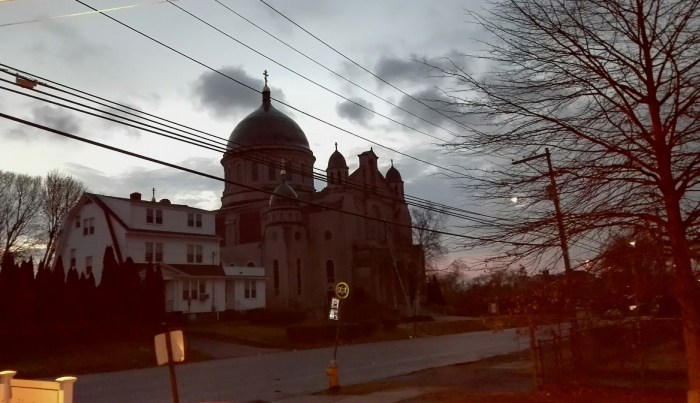



 The Journey of a thousand miles