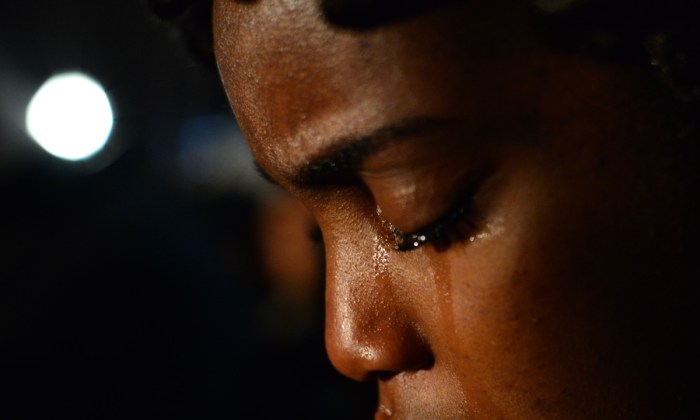
There is no map for losing one’s parent. There is only the path your heart makes as it breaks open. But here is what I can tell you with clarity:
Your grief is not a sign of weakness. It is love in its purest form. It means you were shaped by someone whose absence can rearrange your world. That is not something to hide from or rush through. It is something to honor.
You are not meant to “get over” this. You are meant to carry it differently over time. The weight will shift. The sharpness will soften and mature. The love will always remain.
You are allowed to feel everything. The sorrow, the anger, the relief, the confusion, the numbness, all of it belongs to your journey. Grief is never linear. It is tidal. Let the waves come. They will not drown you. Find your support in the love of family and friends.
You are still and will always be your parents’ son. Death does not undo that. The relationship changes form, but it does not end. You carry their voice in your memory, their gestures in your hands, their lessons in your choices. You are the continuation of their story.
You are allowed to lean on others. Grief is heavy. It was never meant to be carried alone. Let people sit with you, listen to you, or simply be near you. Connection is not a betrayal of your sorrow — it is how our sorrow breathes.
You will grow around this loss. Not by forgetting, but by becoming larger than the pain. Grief stretches the heart in ways nothing else can. It makes room for compassion, depth, and a kind of wisdom that cannot be taught — only lived.
You are doing better than you think. Even on the days when you feel undone. Even when you don’t know how to move forward. Grief is work, and you are doing that work simply by waking up and meeting the day.
You will find your footing again. Not because the loss becomes smaller, but because you will become stronger, deeper, more spacious.
Your parents’ love did not end. It lives within you, in the way you speak, the way you care, the way you continue to grow and become.
And when you are ready, you will discover that the love you shared is not something death can ever take away.
I’ve lived long enough, and worked with enough people in transition, to know that pain isn’t just an inconvenience, it is a signal and a threshold, even a teacher. But the two kinds of pain behave differently in the course of a human life.
Pain that hurts — the acute layer
This is the stuff that hits the nervous system first. It’s the breakup, the betrayal, the loss of a parent, the deep personal loss of meaning that leaves a bruise on the psyche. It is the moment when the body says: “This is too much.”
In my work, I see this in clients who come in with an enduring tightness, a deep sense of overwhelm, it is a story they can barely get through without shaking. It’s often raw. It’s immediate. It’s not yet entirely meaningful… it’s just pain. The kind I witness as a client sits on the edge of my couch, not making eye contact and breathing deeply through tears as they tell their story, often for the very first time.
Pain that alters — the initiatory layer
This is the pain that doesn’t just hurt. It rearranges something. It shifts one’s identity, dissolves and illusions. This pain exposes what was false or reveals what is always true.
It’s the kind of pain that says: “You’re being reconfigured. Don’t try to rush this.”
In my practice, this is the moment when someone stops narrating the event and starts narrating the meaning of what is behind their story. It’s when the story is no longer held within and the pain, although devastating, is also accompanied by a release and a first hope that all will be okay.
The hinge between the two
The transition from hurting to altering often happens in a single quiet moment. When a person stops resisting the pain and starts listening to it, change begins to occur.
It is not about collapsing into it or dramatizing it. It is the first time the truth of the heart is being spoken in a place of safety and understanding. For me as a counselor it is first about just… listening and being present.
That’s where the doorway opens.
I had walked through my own initiatory terrain. I have understood the generational unraveling of sorrow and pain, and the emptiness that followed. This had created a reorientation toward this purpose. My realization that the work I help foster is helping my clients understand that working through the pain-that-hurts to the pain-that-alters is entirely worth the journey to understanding and growth.
There is an anger rising in the young, sharp as winter air, quick to flare, quick to condemn. It is directed toward those who are struggling, toward the ones who steal bread or sleep in doorways or lash out in the small, frantic ways that desperation cries for. On the surface, this anger looks like certainty. It sounds like strength. It carries itself as though it were born from some moral clarity. But if you listen beneath the noise, beneath the heat and the practiced hardness, you can hear the faintest tremor of something older and more fragile. It is a sorrow that has forgotten how to speak its own name.
This sorrow did not begin with them. It is a troubled inheritance, passed down through households where fear was the unspoken language. It is where adults carried exhaustion like a second skin and where children learned to read the weather of their parents’ faces before they learned to read words. It is the sorrow of growing up in a world that teaches you to brace, to tighten, to prepare for impact. A world where tenderness is a sad liability, where vulnerability is dangerous. It is where the line between safety and collapse is thin enough to tear.
When a young person encounters someone who has fallen through the cracks, someone hungry and desperate, someone acting out of the raw instinct to survive, something inside them recoils. Not because they lack compassion, but because the sight of desperation touches a place in them that has never been allowed to soften with curiosity or compassion. It stirs the memory of their own precarity, the quiet knowledge that life can tilt downward without warning. They deeply fear that one misstep or one misfortune can unravel the fragile order they’ve worked so hard to maintain. And because that truth is unbearable, they reach for anger. Anger is easier to hold than fear. Anger feels distant and removed. Anger feels like a wall that keeps the trembling parts of life on the other side.
But anger is only the mask. Beneath it lies the grief of a generation raised on the myth of bold self‑sufficiency. A generation taught that desperate struggle is shameful and the cry of need is a personal failure. They were told to be strong, but their strength was defined as hardened silence. They were told to be resilient, but resilience was defined as never allowing anyone to see you break. They were told to be responsible, but responsibility was defined as carrying those burdens quietly alone. And so, they learned how to swallow their sorrow, to bury it beneath shallow achievements, beneath performance and the relentless demand to stay ahead of their own fear of collapse.
This deep sorrow does not simply disappear. It gathers in the body like a hardening sediment, shaping the way a person sees the world. It becomes the narrow lens through which they interpret the suffering of others. When they see someone who has fallen, they do not see a human being shaped by circumstance; they see the ghost of their own fear. They see the version of themselves they were taught to outrun. And because they cannot bear to feel that fear directly, they project it outward as judgment. They call it accountability. They call it realism and they call it toughness. But it is sorrow, unacknowledged and unclaimed, wearing the armor of anger.
If we choose to peel back the layers gently, and without accusation, we find that the young are not hardened by cruelty but by heartbreak. They are not indifferent; they are overwhelmed. They are not cold. They are carrying more than they know how to name. Their anger is the cry of a generation that has been taught to fear its own tenderness, to distrust its own empathy, to believe that compassion is a luxury reserved for those who feel safe. And safety for many of them has always been conditional, always one step away from slipping through their fingers.
But sorrow, when given room to breathe and develop, begins to soften the edges. When a young person allows themselves to feel the grief beneath their anger of growing up in a world that demanded hardness, something shifts. The desperate person on the street is no longer a threat but a mirror. Anger loses its rigidity. Their heart remembers that it was not built to be a fortress against, but a field awakened by understading.
In that moment, compassion returns not as pity, not as condescension, but as recognition. Recognition that we are all shaped by forces larger than ourselves. Recognition that desperation is not a moral flaw but a human response to unbearable conditions. Recognition that the line between the fortunate and the desperate is thinner than we like to admit. Recognition that sorrow, when truly honored, becomes a bridge rather than a barrier.
The anger of the young is not necessarily a sign of moral decay. It is more of a sign of emotional inheritance. It is the residue of a world that has long forgotten how to care for its people. It is the echo of sorrow that has been silent for too long. And when that sorrow is finally allowed to speak, it does not weaken them. It frees them. It frees them to see others clearly. It frees them to see themselves gently. It frees them to imagine a world where compassion is not a risk but a resource, where vulnerability is not a threat but a truth, where no one’s suffering is met with contempt.
This is the quiet revolution waiting beneath the anger: the return of sorrow to its rightful place, not as a burden but as a guide. A guide back to our shared humanity. A guide back to the understanding that every act of desperation carries a story of desperation and sadness, and every story carries a wound, and every wound carries a longing to be understood.
Guilt enters the experience of lasting sorrow not as its origin, but as the quiet hinge where an inherited story begins to loosen. It arrives in that subtle moment when the heart becomes honest enough to say, I understand something now that I could not understand then. We often treat guilt as a verdict, a weight, a sign that we have failed. But guilt is rarely about failure. It is about vision. It is the first tremor of awakening inside a lineage that has been asleep for a long time. It is the moment when the fog of inherited behavior begins to lift, and we see ourselves and our patterns with clarity that was previously unavailable to us.
Guilt appears because we care. It rises only when we recognize that our actions, or the emotional reflexes we absorbed long before we had language, no longer align with the person we are becoming. In that sense, guilt is not a condemnation but a sign of moral evolution. It interrupts the momentum of the emotional inheritance we’ve been carrying and slows us down long enough to notice the gap between the life we were shaped by and the life we are trying to choose. It is the moment when something inside us whispers, this is not the inheritance I want to continue. This is not the version of myself I want to hand forward. That whisper is small, but it is powerful. It is the beginning of a new lineage.
In generational healing, guilt is often the first doorway into clarity. It is the moment when we stop moving unconsciously through the emotional architecture we inherited and begin to see the structure itself. We start to recognize the anger that wasn’t originally ours, the fear that seeped into us from someone else’s unspoken wounds, the patterns we repeated because they were the only ones we knew. We begin to see the ways our parents were shaped by their parents, and their parents by theirs. We see how survival strategies become family traditions, how silence becomes a language, how tenderness becomes rationed, how love becomes conditional without anyone ever intending harm. Guilt is the flicker of awareness that says, I see the lineage now. I see the cost of it. I see my place inside it. That recognition can ache, but it is also the beginning of freedom.
When guilt is allowed to soften, it transforms into a different kind of sorrow—not the heavy, punishing sorrow that collapses the spirit, but the clarifying sorrow that comes from finally seeing the full landscape of our own humanity. This sorrow is tender. It is the sorrow of realizing that we were shaped long before we had agency, and that we have been trying, in our own imperfect ways, to navigate what we did not choose. It is the sorrow that arises when we understand that the people who raised us were also shaped before they had agency, carrying their own unspoken griefs, their own inherited fears, their own unfinished stories. This kind of sorrow does not crush us. It widens the heart. It deepens our capacity to love, not only others but the earlier versions of ourselves who were doing the best they could with the emotional tools they were given.
If guilt stays rigid, it calcifies into a lived shame. But if it stays open, it becomes enduring wisdom. The shift happens when we realize that although we participated in certain patterns, we didn’t necessarily invent the conditions that produced them. We inherited much of the emotional weather of our families, and we moved through it without knowing there were other climates. To see this clearly is not to excuse ourselves, it is to understand ourselves. It is to say, I see what I could not see before, and now I can choose differently. That realization dissolves the sting of guilt and leaves behind a quieter, steadier compassion. It is a compassion that honors both the child who absorbed the pattern and the adult who is trying to interrupt it.
In the context of generational healing, guilt is not the antagonist. It is the threshold. It is the moment when the lineage becomes visible, when the unconscious becomes conscious, when the inherited story becomes a thing we can finally question. Guilt is the heart’s first attempt at rewriting the script. It is the emotional signal that the cycle-breaker has awakened. And once guilt has done its work, it does not need to remain. It naturally gives way to something more spacious. We develop acceptance, clarity, even a quiet gratitude for the simple fact that we can see more now than we once could.
This is the work of the cycle-breaker. An ability to feel guilt without drowning in it, to let sorrow clarify rather than crush. It is the power to recognize the inheritance without becoming defined by it. To stand at the doorway that guilt opens and choose, with as much gentleness as possible, a different way forward. To understand that the lineage does not end with us, it transforms through us. And in that transformation, guilt becomes not a burden but a blessing, the first sign that the story is finally changing.
Guilt, when viewed through the lens of generational healing, becomes something far more intricate than a personal emotion. It becomes a crossroads between what was handed to us and what we are willing to hand forward. It is the moment when the inherited story pauses long enough for us to hear ourselves think. And in that pause, we begin to sense the weight of what we’ve been carrying, not just our own choices, but the choices of those who came before us. The unspoken rules of the family, the emotional choreography we learned without ever being taught appear in a clear light.
There is a particular kind of guilt that arises when we realize we have repeated something we swore we would never repeat. It is the guilt of hearing our parents’ voice come out of our own mouth. The guilt of reacting with a sharpness we once feared. The guilt of withdrawing in the same way someone once withdrew from us. This guilt is not simply about the moment itself; it is about the shock of recognition. It is the realization that the lineage lives in us more deeply than we knew. And yet, this recognition is also the beginning of liberation, because we cannot interrupt what we cannot see.
As we continue to look more closely, guilt begins to reveal the architecture of the lineage. We start to see how our parents were shaped by their parents, how their tenderness was limited by what they never received, how their fears were inherited rather than chosen. We begin to understand that the patterns we carry were survival strategies as ways of coping with scarcity, instability, silence, or emotional unpredictability. These strategies were passed down not because they were healthy, but because they were familiar. And familiarity, in a family system, often masquerades as truth.
This understanding does not erase the harm we may have caused, nor does it absolve us of responsibility. But it does soften the edges of guilt. It allows us to hold our actions within a wider context, one that includes the generations behind us and the generations ahead. It allows us to say, I see the pattern now. I see how it moved through me. And I see that I have the power to interrupt it. This is the moment when guilt begins to transform into something else, something steadier, something more spacious.
The sorrow that follows this transformation is not the sorrow of self-punishment. It is the sorrow of awakening. It is the sorrow of realizing how much of our life was shaped by forces we did not choose. It is the sorrow of seeing our parents not as the architects of our pain, but as the inheritors of their own. It is the sorrow of recognizing that the lineage is not a chain of villains and victims, but a chain of human beings doing the best they could with what they had. This sorrow is not meant to crush us. It is meant to open us. It is meant to make room for compassion, not the kind that excuses harm, but the kind that understands its origins.
As this compassion grows, guilt begins to lose its sharpness. It becomes less of a weight and more of a guide. It becomes the emotional signal that we are stepping out of autopilot and into awareness. It becomes the reminder that we are capable of choosing differently, even if the choice is difficult, even if it requires us to confront parts of ourselves we would rather avoid. Guilt, in this sense, becomes a companion on the path of healing.
And eventually, guilt gives way to something quieter. It gives way to a kind of inner spaciousness, a clarity that comes from seeing the lineage without being swallowed by it. It gives way to a sense of responsibility that is rooted not in fear, but in love for the people who came before us, love for the people who will come after us, and love for the self who is trying, with as much honesty as possible, to change the story.
The deeper work of the cycle-breaker is to stand at the threshold guilt exposes and choose a different path, not out of self-condemnation, but out of devotion to the possibility of a gentler lineage. To understand that the story does not end with us, it transforms through us. And in that transformation, guilt becomes not a burden but a blessing. It is the first sign that the old story is loosening its grip and a new one is beginning to take shape.
Forgiveness, when it finally enters the landscape of generational healing, does not arrive as a grand gesture. It does not sweep in with trumpets or declarations. It comes quietly, almost shyly, after guilt has softened and sorrow has done its work. Forgiveness is not the erasure of what happened. It is not the denial of harm. It is the moment when the heart becomes spacious enough to hold the truth without tightening around it. It is the moment when we stop trying to rewrite the past and begin to rewrite our relationship with it.
Forgiveness begins with seeing our lineage clearly. It begins with recognizing that the people who shaped us were themselves shaped long before they had the chance to choose differently. It begins with understanding that the patterns we inherited were not born in our generation; they were carried across decades, sometimes centuries, passed down through silence, fear, scarcity, or the simple absence of emotional language. When we see this, forgiveness becomes less about excusing what happened and more about acknowledging the full complexity of the story.
There is a particular kind of forgiveness that emerges when we realize our parents were not withholding love out of malice, but out of limitation. They loved with the tools they had, even if those tools were blunt or broken. They protected themselves in ways that sometimes harmed us, not because they wanted to, but because they did not know another way. This does not erase the impact of their actions, but it does soften the narrative. It allows us to hold them as human beings rather than as symbols of our pain.
Forgiveness also extends inward. It is the moment when we stop punishing ourselves for the ways we repeated the lineage before we understood it. It is the moment when we say to ourselves, I was doing the best I could with what I knew. And now that I know more, I can do more. This self-forgiveness is essential, because without it, guilt becomes a cage rather than a doorway. Without it, we remain trapped in the very patterns we are trying to interrupt.
Lineage repair begins here—in the quiet, steady work of seeing clearly, forgiving gently, and choosing differently. It is not a single act but a series of small, deliberate shifts. It is the decision to pause before reacting, to breathe before repeating an inherited reflex, to speak a softer word where a harsher one once lived. It is the choice to offer the tenderness we never received, not because it was modeled for us, but because we have decided it is the kind of tenderness the lineage deserves.
Repair is not about fixing the past. It is about tending to the present in a way that alters the future. It is about becoming the person who can hold both the wound and the possibility of healing at the same time. It is about recognizing that the lineage does not heal through perfection, but through presence—through the willingness to stay with the discomfort long enough to understand it, and to respond with something other than what was handed to us.
As we continue this work, something remarkable begins to happen. The lineage, which once felt like a weight, begins to feel like something that can be shaped, softened, redirected. We begin to sense that we are not simply inheritors of a story, but authors of its next chapter. We begin to understand that the healing we do within ourselves ripples outward, touching the generations before us and the generations after us in ways we may never fully see.
Forgiveness, then, becomes an act of lineage repair. It becomes the way we loosen the knots that have been tightening for decades. It becomes the way we return humanity to the people who lost access to their own. It becomes the way we reclaim our agency, our tenderness, our capacity to love without fear. And in doing so, we become a stronger hinge in our family story. It becomes the place where the old pattern ends and the new one begins.
Many of us move through life carrying an anger we never consciously chose. It settles in us early, long before we have words, long before we understand what we’re absorbing. We inherit the emotional weather of the people who raised us. We learn their beliefs, their fears, their unspoken rules about what can be felt and what must be hidden. Over time, these impressions become the self we think we are. They shape how we see the world, how we brace against it, how we respond when something touches an old wound. What we call “our” anger is often the residue of generations, passed down quietly, absorbed without understanding or question.
From this inherited self, we form a vision of the world. We don’t realize we’re doing it. It simply becomes the way things are. And from that place, two paths begin to open. One path is familiar, almost automatic. It’s the path shaped by the negativity we’ve carried for so long that it feels like truth. Depression, hatred, and self‑loathing take root here, fed by the echoes of what we witnessed and internalized. This path narrows our presence in the world. It teaches us to expect harm, to distrust softness, to believe that our worth is conditional or fragile. It is a path built from old stories we never wrote but continue to live out.
But there is another path. A quieter path, but difficult to recognize at first. It begins with a small shift, a moment of curiosity, a question that rises from somewhere deeper than our conditioning. It asks whether the negativity we carry is really ours, whether the world is truly as hostile as our early experiences taught us to believe. This path often opens when we encounter someone who lives differently. Someone whose gentleness doesn’t feel shallow or performative, whose understanding isn’t transactional, or whose presence doesn’t demand that we shrink or defend ourselves. Through them, we begin to sense a form of love that doesn’t rely on the boundaries we built for protection. Their way of being interrupts the old patterns.
In that interruption, something in us remembers. Not a memory of events, but a memory of the possibility of possibly who we might be without the weight we’ve been carrying. Our body softens. Our mind loosens its grip on inherited narratives. We begin to see that love is not a lesson to be learned but an experience that reveals what we had forgotten. We begin to see that we were never meant to live inside the confines of this inherited pain.
Choosing this second path is not a single moment but a gradual turning. It asks us to meet ourselves with honesty, to question what we once accepted as inevitable, to allow gentleness to become our teacher rather than a perceived threat. And as we do, the world begins to shift, not because it has changed, but because we are no longer seeing it through the eyes of the wounded self we inherited.
The black sheep as the one who interrupts the inheritance
In a family shaped by unexamined anger, rigid beliefs, and emotional patterns passed down without question, the black sheep is the one who feels the weight of that inheritance and quietly says, this cannot be all there is. They are the one who senses that the emotional weather they grew up in is not the truth of the world, even if they don’t know yet what the alternative looks like.
This person often carries the same wounds as everyone else, but something in them refuses to calcify around those wounds. Instead of letting inherited anger define their identity, they begin to notice the cracks in the story. They question the inevitability of the pain. They feel the discomfort of not fitting into the family’s emotional script, and rather than forcing themselves back into it, they follow the discomfort toward something more honest.
The black sheep as the one who chooses curiosity over repetition
Where others continue the familiar path of reacting from old wounds, reenacting old narratives, the black sheep turns toward curiosity. They ask the questions no one else asks about long held anger, hatred with no real purpose, and what is on the other side of all this.
This curiosity is not rebellion for rebellion’s sake. It is a deeper instinct toward truth. It is the beginning of unlearning.
The black sheep as the one transformed by gentleness
The black sheep is also the one who is changed by encountering a different kind of presence, someone whose gentleness interrupts the inherited pattern. While others might dismiss or distrust that gentleness, the black sheep recognizes it as something they have been longing for without knowing it. They allow themselves to be softened. They allow love to teach them what their lineage never could.
This is what makes them different: not defiance, but openness.
Ultimately, the black sheep becomes the hinge point in the generational story. They are the person who refuse to pass down what was passed on to them. They choose the quieter and gentler path. A path shaped by awareness, by love and courage, by the willingness to see the world through something other than inherited pain.
In the end, the deeper question becomes whether we are willing to let this new way of being take root, and what it might mean to pass forward a different inheritance than the one we received.
Many people today are living with a quiet but persistent ache. It is an ache born from witnessing the hatred, division, and government‑sanctioned hostility seeping into the fabric of our daily life. We counselors and therapists hear it in our offices every day: the sense that the world has tilted, that the social contract has frayed, that something essential in our shared humanity is being threatened. This is not ordinary stress. It is a form of collective wounding that touches the psyche, the body, and the spirit. It calls for a form of counseling that is both psychologically grounded and spiritually attuned.
When the source of fear or aggression comes from institutions meant to protect, the injury becomes existential. Clients often describe feeling unmoored, as if the ground beneath them has shifted. Their sense of identity may be shaken, especially if their communities are targeted or marginalized. Many experience a deep moral injury, a spiritual pain that arises when witnessing cruelty or injustice carried out in their name. Others grieve the loss of a country or a shared moral center they once believed in. This grief is not a sign of weakness; it is a sign that something sacred has been violated.
In such times, the counseling room becomes more than a clinical space. It becomes a sanctuary. It becomes a place where clients can breathe, feel, and remember who they are beneath the noise. A spiritually attuned counselor offers a presence that steadies rather than fixes. Being a witness that dignifies rather than debates. A language that restores coherence rather than amplifies fear. Simply acknowledging a client’s sorrow, saying, “It totally makes sense that you feel this way” becomes a form of spiritual companionship. It tells them they are not alone in the dark.
Political hostility often leaves people feeling powerless, but spiritual healing begins by helping clients reclaim the one domain that cannot be taken from them: their inner life. This reclamation may begin with their breath, with their body, or with the quiet recognition of values that transcend political cycles. It may take the form of meditation, prayer, silence, a long-learned ritual, or in a mindful movement. These practices that restore inner sovereignty remind clients that their humanity is not defined by the turbulence around them. Agency does not begin with sweeping political action; it begins with the ability to inhabit one’s own being with clarity and intention.
Many clients are grieving the loss of a world they believed in, and others feel betrayed by leaders or institutions they once trusted. Still others feel spiritually fractured by witnessing cruelty normalized. A spiritual approach invites clients to name their grief without rushing to resolve it, to recognize betrayal as a rupture of trust rather than a personal failure, and to explore the deeper longing beneath their pain. Rituals of release, writing, creating, burying, or speaking aloud what must be let go, can help transform grief into wisdom rather than despair.
Because political trauma is not only psychological but somatic, the body becomes a central site of healing. Chronic threat tightens the muscles, shortens the breath, and narrows the field of awareness. Helping clients return to the body as a place of refuge rather than alarm is essential. Grounding practices, slow movement, breathwork, and even simple contact with the earth can help restore a sense of belonging and safety. When the body softens, the spirit can begin to rise again.
Counselors and therapists themselves are living through the same climate as their clients, and their own spiritual grounding becomes part of the work. Counselors must cultivate practices that restore inner quiet, seek communities that nourish the heart, and maintain boundaries that protect their nervous system. A counselor who is spiritually anchored becomes a quiet beacon as someone who can sit in the storm without being swept away. This offers clients a living example of steadiness in a time of upheaval.
Clients often ask how to stay human when the world feels so inhumane. A spiritually informed response begins with the recognition that hatred is not the deepest truth of the world. Beneath the noise lies a quieter truth: connection, dignity, compassion, and the unbroken thread of humanity that runs through all of us. Even in times of darkness, the human spirit knows how to orient toward the light. Counseling becomes a place where clients can practice this orientation, rediscover their inner compass, and reclaim the possibility of living with integrity, courage, and love.
We are living through a defining and collective threshold. The work of counseling in this era is not only to soothe distress but to help people remember who they are beneath the machinery of fear. It is to help them reclaim their inner sovereignty, reconnect with their deepest values, and rediscover the quiet, enduring strength of the human spirit. In a time of division and hostility, the therapeutic relationship becomes a radical act of healing. It becomes a reminder that even when the world fractures, the heart can remain whole.
I’ve come to believe that much of what we call anger, fear, hatred, or defensiveness is simply sorrow that never had a place to go. Sorrow is often the first wound—the original break in the continuity of our belonging. When it isn’t met, it doesn’t dissolve. It shifts shape. It becomes sharper, louder, more armored. But beneath all of that, it remains sorrow, still longing for a witness, still waiting for a breath and a moment of rest.
Most of the sorrow we carry isn’t ours alone. It’s older than we are. Families hand down their unfinished grief the way they pass down stories or heirlooms—quietly, without understanding or instruction, with a faint hope that someone down the line will know how to hold it. A child can grow up with vigilance that doesn’t match their life, or a shame that feels strangely ancient. These aren’t personal flaws. They are echoes—the emotional fingerprints of what previous generations couldn’t face, name, or grieve.
When sorrow goes unspoken long enough, it becomes generational. It becomes the emotional climate a family breathes. It shapes how people love, how they protect themselves, how they interpret the world. And because it’s invisible, it’s easy to mistake for personality or fate. Yet beneath the surface, the truth remains: the body remembers what the lineage could not resolve.
Healing begins the moment sorrow is witnessed. Not analyzed. Not managed. Simply witnessed. When someone can sit with their grief without rushing it or trying to shrink it, the whole system begins to soften. The body stops bracing. The psyche stops contorting. In that quiet, sorrow reveals itself not as a threat but as evidence of love—of what mattered, of what shaped us, of what we longed to hold onto. When sorrow is met with presence, the secondary emotions—anger, fear, defensiveness—lose their urgency. What remains is something more spacious, more gentle, more human.
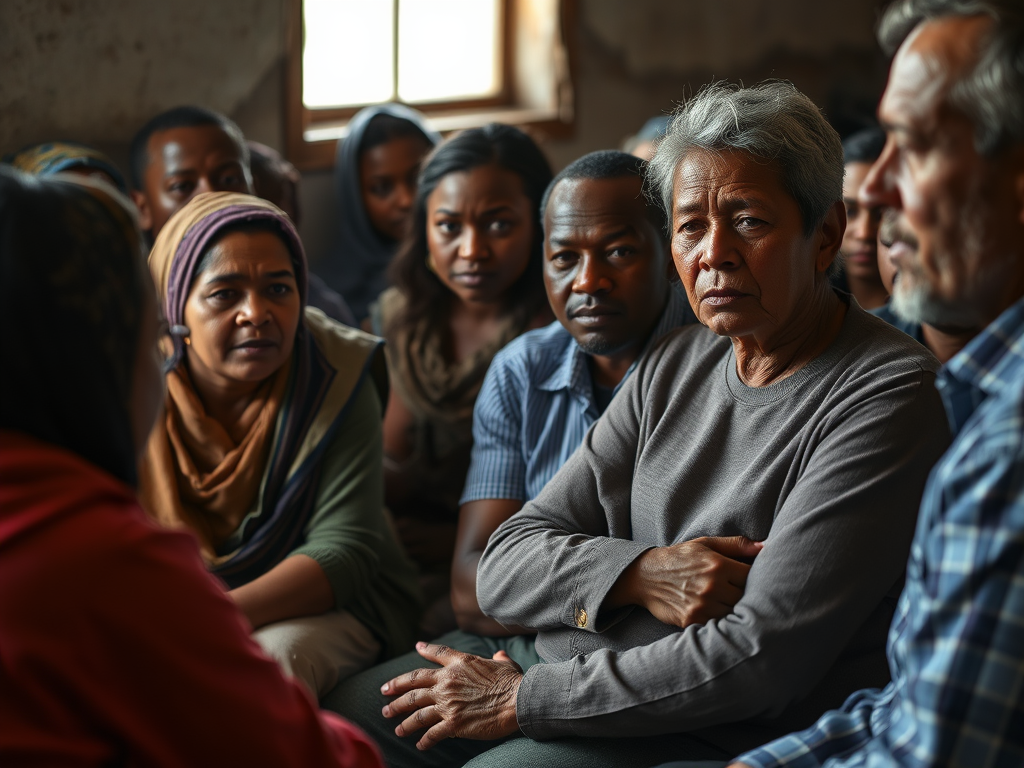
Communities carry sorrow too. Cultures hold grief that was never metabolized—losses denied, histories silenced, ruptures left unrepaired. When a community finally names its wounds, something shifts. Grief becomes a source of connection rather than division. People begin to see their suffering as part of a larger story, and healing becomes a shared act. Ritual, storytelling, and collective remembrance become vessels that turn sorrow into resilience. A community that can grieve together becomes a community capable of imagining a future not defined by its wounds.
If sorrow is the root, then the work is not about correction or control. It’s about presence. It’s about the courage to face what generations before us could not. It’s about giving shape and language to what was carried in silence. This is relational work. Communal work. Deep ancestral work.
This is where my practice lives—at the threshold where people can finally set something down. In the quiet space where sorrow can be named without fear. In the conversations that help someone trace the lineage of their emotional patterns and choose a different inheritance. My role is not to fix. It is to accompany. To witness. To help reweave a story that began long before our personal memories.
To reconcile generational sorrow is to interrupt the cycle. It is to offer the next generation a different emotional landscape—one shaped not by avoidance, but by understanding; not by fear, but by presence; not by inherited wounds, but by the possibility of a new belonging.
Sorrow may be the root, but so is love. And when sorrow is finally allowed to speak, it often leads us back to the very thing we thought we had lost: our capacity to feel, to connect, to imagine, and to heal.




 The Journey of a thousand miles