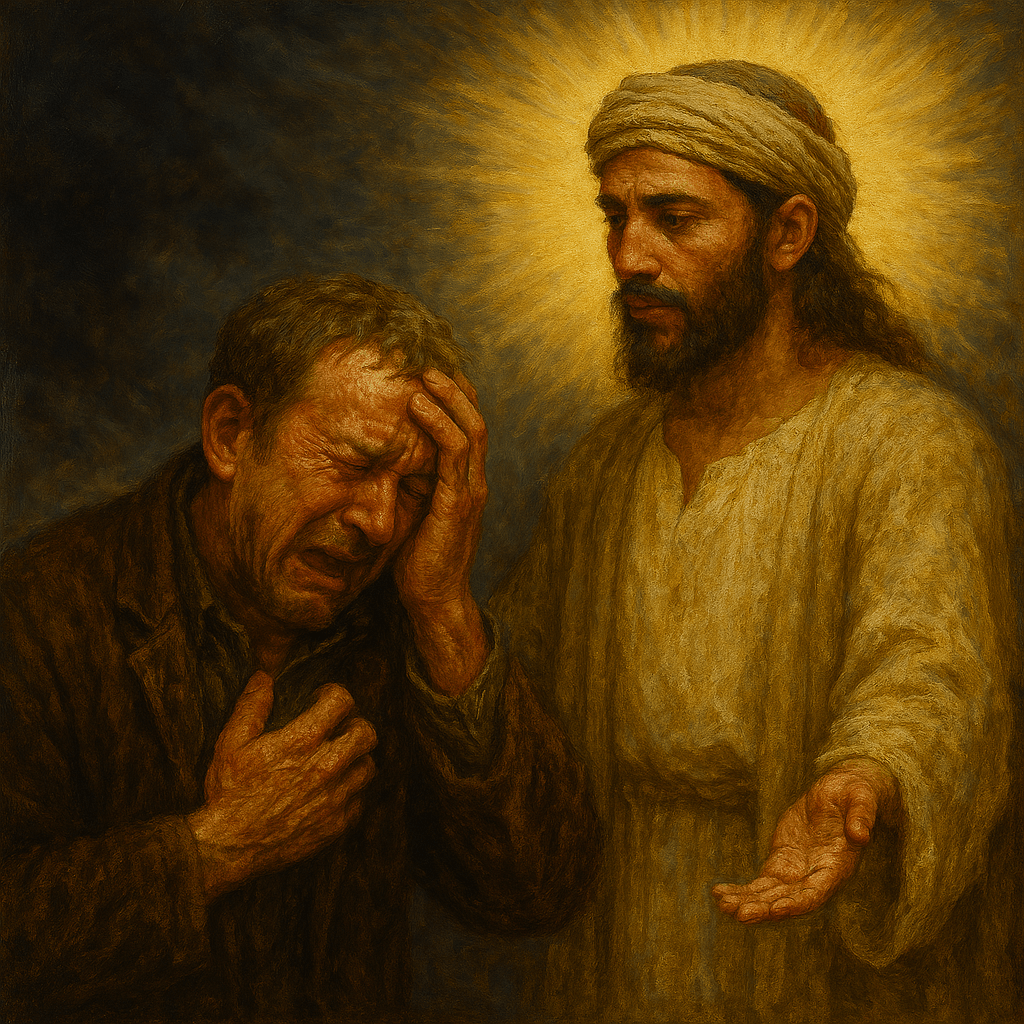
In a political moment where apocalyptic language is being invoked with startling casualness. Where leaders speak of Armageddon, divine battles, and the second coming as if they were policy tools, it becomes necessary to pause and ask what any of this would actually mean if taken seriously. Not politically, but spiritually. Not as rhetorical, but as a reality.
If there were such a thing as a deity returning to judge our humanity, I do not imagine a spectacle of destruction. I do not imagine fire, or armies, or the triumph of one faction over another. What I imagine is something far quieter and far more devastating. I believe it will be the sudden and unavoidable illumination of who we really are, a personal reckoning of sorts.
Judgment, in this sense, would not be an external punishment. It would be the collapse of every illusion we have built to protect ourselves from the truth of our own actions. Hatred, ignorance, and cruelty survive only in the shadows, where fear goes unexamined. Where stories about “the other” remain unchallenged and where people cling to identities built on opposition rather than understanding. If a divine presence were to enter that space, the first thing it would do is reveal what has always been there.
And that revelation would be painful.
The pain would not come from a wrathful deity, but from the shock of seeing ourselves clearly. It would be the grief of recognizing the harm we have caused, the smallness of the fears we mistook for convictions, the ways we allowed sorrow to turn to ignorance then into a hardened ideology. It would be the sorrow of realizing how much of our lives had been shaped by distortions we never questioned.
This is not a new idea. Across religious and philosophical traditions, judgment is often described as illumination rather than punishment. In Christian mysticism, the presence of the divine is imagined as a light that reveals everything we’ve held deeply, motives, wounds, illusions, and the consequences of our choices. In Buddhist thought, suffering arises when ignorance is confronted by insight, and awakening begins with the painful recognition of what we have refused to see. Even in secular psychology, remorse is understood as the natural outcome of clarity.
In all of these traditions, real terror is not divine anger. It is self‑recognition, a painful and devastating satori.
This vision stands in stark contrast to the apocalyptic fantasies being invoked in our current political discourse. Those fantasies imagine judgment as a battlefield, a cosmic sorting of allies and enemies. But the judgment I realize is internal, not external. It is not about who wins. It is about who finally sees.
And in that moment of clarity, those who have cultivated hatred, those who have wielded ignorance as a weapon or used fear as a tool would experience the deepest of sorrows. Not because they are being punished, but because they have finally awakened.
There is, in this vision, a strange kind of hope. If judgment is illumination, then even the most entrenched forms of hatred are not permanent. They are simply unexamined. And once they are seen clearly, they lose their power.
The question that remains is what comes after such an awakening. If hatred collapses under the weight of its own recognition, what grows in its place? Does sorrow open the door to redemption, or does it mark a turning point in the moral landscape of humanity?
 The Journey of a thousand miles