
Love and Loss

There is no map for losing one’s parent. There is only the path your heart makes as it breaks open. But here is what I can tell you with clarity:

Your grief is not a sign of weakness. It is love in its purest form. It means you were shaped by someone whose absence can rearrange your world. That is not something to hide from or rush through. It is something to honor.

You are not meant to “get over” this. You are meant to carry it differently over time. The weight will shift. The sharpness will soften and mature. The love will always remain.

You are allowed to feel everything. The sorrow, the anger, the relief, the confusion, the numbness, all of it belongs to your journey. Grief is never linear. It is tidal. Let the waves come. They will not drown you. Find your support in the love of family and friends.

You are still and will always be your parents’ son. Death does not undo that. The relationship changes form, but it does not end. You carry their voice in your memory, their gestures in your hands, their lessons in your choices. You are the continuation of their story.

You are allowed to lean on others. Grief is heavy. It was never meant to be carried alone. Let people sit with you, listen to you, or simply be near you. Connection is not a betrayal of your sorrow — it is how our sorrow breathes.

You will grow around this loss. Not by forgetting, but by becoming larger than the pain. Grief stretches the heart in ways nothing else can. It makes room for compassion, depth, and a kind of wisdom that cannot be taught — only lived.

You are doing better than you think. Even on the days when you feel undone. Even when you don’t know how to move forward. Grief is work, and you are doing that work simply by waking up and meeting the day.

You will find your footing again. Not because the loss becomes smaller, but because you will become stronger, deeper, more spacious.

Your parents’ love did not end. It lives within you, in the way you speak, the way you care, the way you continue to grow and become.

And when you are ready, you will discover that the love you shared is not something death can ever take away.
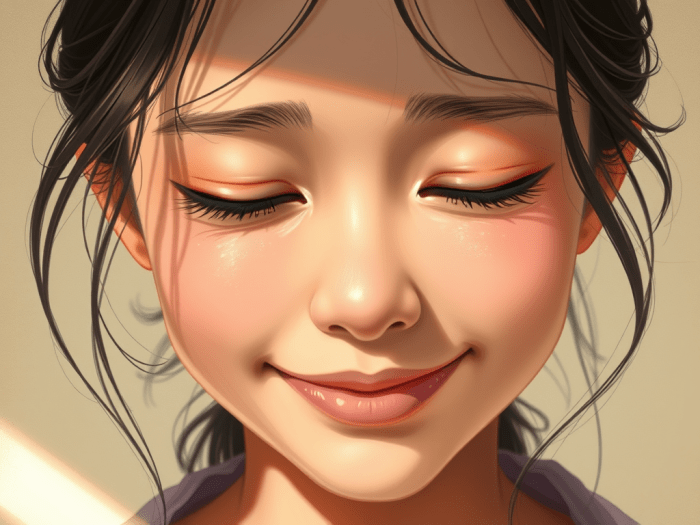

WHEN SORROW BECOME JOY

There have been moments when I wondered whether sorrow can truly become joy, or whether these two states simply take turns inhabiting the same room within us. But the longer I continue to sit with this question, the more I sense that the transformation is not about replacing one feeling with another. It is about love changing shape.

Sorrow is sometimes the first language love learns. It arrives through loss, through longing, through the ache of what was withheld or never fully formed. It settles into the body as a kind of gravity, a weight that feels older than our own lifetime. And when that sorrow is inherited, it can feel like a duty, a continuation of the emotional weather our lineage never really learned to escape.

But love is not static. It shifts, it adapts, it searches for openings. Even in sorrow, love is trying to move. It is trying to breathe. It is trying to find its way back to its true self.

The transformation from sorrow to joy is not a sudden event. It is slow, as an almost imperceptible softening. It begins when we stop treating sorrow as a permanent identity and start meeting it as a visitor. When we stop bracing against it and allow it to be held. When we stop inheriting it unquestioned and begin to listen to what it is trying to protect.

In that listening, something loosens. Sorrow doesn’t vanish, but it becomes less sharp, less defining. It begins to reveal the love beneath it. It reveals the love that was wounded, the love that was silenced, the love that wasn’t given room to grow. And when that love is finally allowed to move freely, it expresses itself as joy.

Joy, then, is not the opposite of sorrow. It is sorrow that has been tended. It is love that has been unburdened. It is the same emotional root system but no longer tangled in fear or memory. Joy is what emerges when love is no longer carrying the full weight of loss.

This is why the journey feels fragile. It asks us to trust that our hearts can hold more than one truth at a time. It asks us to believe that the story does not end where the pain began. It asks us to let love expand beyond the shape sorrow taught it to take.

And yet, fragile as it is, this transformation is real. It happens in small, almost invisible ways. Often as a breath that comes easier, a moment of presence where there used to be tension, and a softening toward ourselves that would have been previously impossible. These are not dramatic victories. They are quiet ones. But they are the ones that change our view on life and purpose.

Sorrow becomes joy not by being erased, but by being understood. And in that understanding, love finds its way back to openness. It becomes spacious enough to hold the past without being defined by it. It becomes strong enough to choose a different future.

This is the transformation: the same love, finally allowed to breathe.

The Root of Sorrow

I’ve come to believe that much of what we call anger, fear, hatred, or defensiveness is simply sorrow that never had a place to go. Sorrow is often the first wound—the original break in the continuity of our belonging. When it isn’t met, it doesn’t dissolve. It shifts shape. It becomes sharper, louder, more armored. But beneath all of that, it remains sorrow, still longing for a witness, still waiting for a breath and a moment of rest.

Most of the sorrow we carry isn’t ours alone. It’s older than we are. Families hand down their unfinished grief the way they pass down stories or heirlooms—quietly, without understanding or instruction, with a faint hope that someone down the line will know how to hold it. A child can grow up with vigilance that doesn’t match their life, or a shame that feels strangely ancient. These aren’t personal flaws. They are echoes—the emotional fingerprints of what previous generations couldn’t face, name, or grieve.

When sorrow goes unspoken long enough, it becomes generational. It becomes the emotional climate a family breathes. It shapes how people love, how they protect themselves, how they interpret the world. And because it’s invisible, it’s easy to mistake for personality or fate. Yet beneath the surface, the truth remains: the body remembers what the lineage could not resolve.

Healing begins the moment sorrow is witnessed. Not analyzed. Not managed. Simply witnessed. When someone can sit with their grief without rushing it or trying to shrink it, the whole system begins to soften. The body stops bracing. The psyche stops contorting. In that quiet, sorrow reveals itself not as a threat but as evidence of love—of what mattered, of what shaped us, of what we longed to hold onto. When sorrow is met with presence, the secondary emotions—anger, fear, defensiveness—lose their urgency. What remains is something more spacious, more gentle, more human.

Communities carry sorrow too. Cultures hold grief that was never metabolized—losses denied, histories silenced, ruptures left unrepaired. When a community finally names its wounds, something shifts. Grief becomes a source of connection rather than division. People begin to see their suffering as part of a larger story, and healing becomes a shared act. Ritual, storytelling, and collective remembrance become vessels that turn sorrow into resilience. A community that can grieve together becomes a community capable of imagining a future not defined by its wounds.

If sorrow is the root, then the work is not about correction or control. It’s about presence. It’s about the courage to face what generations before us could not. It’s about giving shape and language to what was carried in silence. This is relational work. Communal work. Deep ancestral work.

This is where my practice lives—at the threshold where people can finally set something down. In the quiet space where sorrow can be named without fear. In the conversations that help someone trace the lineage of their emotional patterns and choose a different inheritance. My role is not to fix. It is to accompany. To witness. To help reweave a story that began long before our personal memories.

To reconcile generational sorrow is to interrupt the cycle. It is to offer the next generation a different emotional landscape—one shaped not by avoidance, but by understanding; not by fear, but by presence; not by inherited wounds, but by the possibility of a new belonging.

Sorrow may be the root, but so is love. And when sorrow is finally allowed to speak, it often leads us back to the very thing we thought we had lost: our capacity to feel, to connect, to imagine, and to heal.