Counseling Through an Age of Hatred and Government‑Driven Violence

A Spiritual Path to Healing
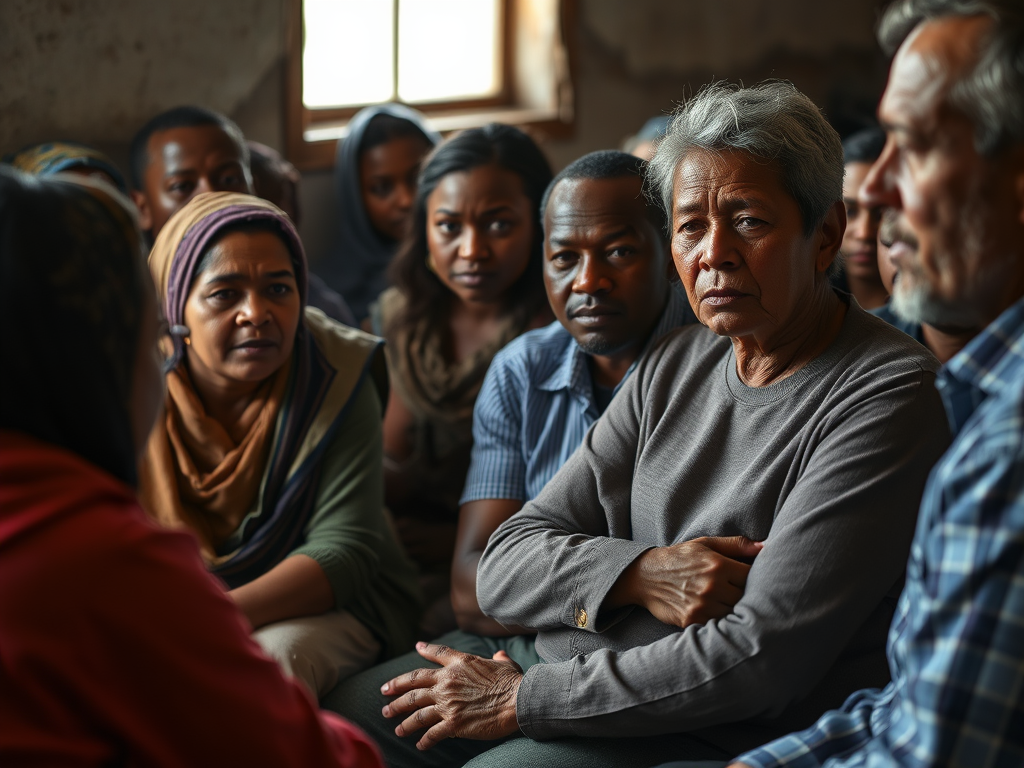
Many people today are living with a quiet but persistent ache. It is an ache born from witnessing the hatred, division, and government‑sanctioned hostility seeping into the fabric of our daily life. We counselors and therapists hear it in our offices every day: the sense that the world has tilted, that the social contract has frayed, that something essential in our shared humanity is being threatened. This is not ordinary stress. It is a form of collective wounding that touches the psyche, the body, and the spirit. It calls for a form of counseling that is both psychologically grounded and spiritually attuned.

When the source of fear or aggression comes from institutions meant to protect, the injury becomes existential. Clients often describe feeling unmoored, as if the ground beneath them has shifted. Their sense of identity may be shaken, especially if their communities are targeted or marginalized. Many experience a deep moral injury, a spiritual pain that arises when witnessing cruelty or injustice carried out in their name. Others grieve the loss of a country or a shared moral center they once believed in. This grief is not a sign of weakness; it is a sign that something sacred has been violated.

In such times, the counseling room becomes more than a clinical space. It becomes a sanctuary. It becomes a place where clients can breathe, feel, and remember who they are beneath the noise. A spiritually attuned counselor offers a presence that steadies rather than fixes. Being a witness that dignifies rather than debates. A language that restores coherence rather than amplifies fear. Simply acknowledging a client’s sorrow, saying, “It totally makes sense that you feel this way” becomes a form of spiritual companionship. It tells them they are not alone in the dark.

Political hostility often leaves people feeling powerless, but spiritual healing begins by helping clients reclaim the one domain that cannot be taken from them: their inner life. This reclamation may begin with their breath, with their body, or with the quiet recognition of values that transcend political cycles. It may take the form of meditation, prayer, silence, a long-learned ritual, or in a mindful movement. These practices that restore inner sovereignty remind clients that their humanity is not defined by the turbulence around them. Agency does not begin with sweeping political action; it begins with the ability to inhabit one’s own being with clarity and intention.

Many clients are grieving the loss of a world they believed in, and others feel betrayed by leaders or institutions they once trusted. Still others feel spiritually fractured by witnessing cruelty normalized. A spiritual approach invites clients to name their grief without rushing to resolve it, to recognize betrayal as a rupture of trust rather than a personal failure, and to explore the deeper longing beneath their pain. Rituals of release, writing, creating, burying, or speaking aloud what must be let go, can help transform grief into wisdom rather than despair.

Because political trauma is not only psychological but somatic, the body becomes a central site of healing. Chronic threat tightens the muscles, shortens the breath, and narrows the field of awareness. Helping clients return to the body as a place of refuge rather than alarm is essential. Grounding practices, slow movement, breathwork, and even simple contact with the earth can help restore a sense of belonging and safety. When the body softens, the spirit can begin to rise again.

Counselors and therapists themselves are living through the same climate as their clients, and their own spiritual grounding becomes part of the work. Counselors must cultivate practices that restore inner quiet, seek communities that nourish the heart, and maintain boundaries that protect their nervous system. A counselor who is spiritually anchored becomes a quiet beacon as someone who can sit in the storm without being swept away. This offers clients a living example of steadiness in a time of upheaval.

Clients often ask how to stay human when the world feels so inhumane. A spiritually informed response begins with the recognition that hatred is not the deepest truth of the world. Beneath the noise lies a quieter truth: connection, dignity, compassion, and the unbroken thread of humanity that runs through all of us. Even in times of darkness, the human spirit knows how to orient toward the light. Counseling becomes a place where clients can practice this orientation, rediscover their inner compass, and reclaim the possibility of living with integrity, courage, and love.

We are living through a defining and collective threshold. The work of counseling in this era is not only to soothe distress but to help people remember who they are beneath the machinery of fear. It is to help them reclaim their inner sovereignty, reconnect with their deepest values, and rediscover the quiet, enduring strength of the human spirit. In a time of division and hostility, the therapeutic relationship becomes a radical act of healing. It becomes a reminder that even when the world fractures, the heart can remain whole.


Mindfulness Through a Clearer Lens

Mindfulness is often presented as a gentle cure, a universal balm for the restless mind. But when you look closely at the research and listen honestly to stories of lived experiences, a more nuanced picture emerges. Mindfulness is powerful. And anything powerful deserves respect.

Across cultures and centuries, contemplative traditions have acknowledged that turning inward can stir things up. Modern science is now catching up with what ancient practitioners already knew: mindfulness can soothe, but it can also unsettle. For some people, especially those carrying trauma or chronic stress, the stillness of meditation doesn’t necessarily create calm. Mindfulness often removes the distractions that were holding everything together.

Researchers have documented this in growing detail. Some individuals experience spikes of anxiety when they try to sit quietly. Others encounter memories or sensations they didn’t expect to experience. A smaller but significant number report dissociation, perceptual distortions, or a sense of losing contact with themselves. These aren’t failures of practice; they’re signs that the inner world is complex, intricately layered, and sometimes fragile.

Part of the challenge is cultural. Mindful practices originally developed for monastics, supported by teachers, community, and years of preparation have been lifted out of their original containers and dropped into corporate workshops, apps, and weekend retreats. The modern wellness world often sells mindfulness as universally safe, and universally soothing. But science tells a more honest story: mindfulness helps many, but not all, and not always.

When mindfulness is offered without screening, pacing, or guidance, people can find themselves overwhelmed. When it’s framed as the “right” way to handle distress, individuals may blame themselves when they feel worse instead of better. And when it’s used as a way to bypass difficult emotions rather than meet them, it can quietly reinforce the very patterns it’s meant to soften.

None of this diminishes the value of mindfulness. It simply restores its depth. Mindfulness is not a quick fix. It is not a universal prescription. It is a doorway, and one of many, into presence and self‑understanding. For some, it opens easily. For others, it requires preparation, grounding, or a different path entirely.

The research is clear: mindfulness can be transformative, but it must be approached with discernment. Shorter practices, external anchors, trauma‑sensitive guidance, and a willingness to pause when things feel too intense all make the practice safer and more humane. And for many people, movement, creativity, ritual, or relational presence may be a more accessible way into the same territory.

What matters most is honesty about what mindfulness can do, and what it sometimes does not do. When we stop pretending it’s always universally gentle, we make room for a more compassionate and realistic relationship with our inner world. And in that honesty, mindfulness becomes what it was always meant to be: not as an escape from ourselves, but a careful, respectful meeting with what’s already here.

Scientific and journalistic sources for further reading:

  • Historical documentation of adverse effects — The Dharmatrāta Meditation Scripture (over 1,500 years old) describes symptoms of depression, anxiety, psychosis‑like episodes, dissociation, and depersonalization associated with meditation practice.
  • Systematic review of adverse eventsThe Adverse Effects of Meditation‑Interventions and Mind–Body Practices: A Systematic Review (Taylor et al., 2022, Mindfulness, Springer Nature) identifies that adverse effects are underreported and synthesizes evidence of anxiety, dissociation, traumatic intrusions, and functional impairment across multiple studies.

Crossing the Threshold: A counselor’s Reflection on Suicidal Despair

There are moments in counseling when a person reveals that they have stepped into a terrain they never imagined themselves entering. The first serious contemplation of suicide is one of those moments. It is not simply a deepening of depression or an intensification of distress. It is an existential threshold, a rupture in the continuity of one’s inner life. It becomes a moment when the psyche experiments with the possibility of ending itself. For many, this crossing is experienced not as a sole thought but as an emerging and all-encompassing moment, something that leaves an indelible mark on one’s mind and the body long after the crisis has passed.

Once a person has crossed that frightening threshold, that bleak landscape becomes known to them. It is no longer an unimaginable place but a sadly remembered one. It becomes a road that can be returned to with unsettling ease and with unexpected clarity. Some individuals come back from that edge with a deeper understanding of their own sorrow and suffering. They speak of limits they can no longer deny, of truths they had been delaying and of a new tenderness toward themselves. The encounter with self-annihilation becomes, paradoxically, a source of renewed commitment to living differently. They have seen the bottom of their despair, and in doing so, they discover a fierce honesty about what must change if they are to remain alive.

Others return from that threshold shaken and ashamed. They fear their own mind, as if it has revealed a capacity they cannot trust. They worry that the path is now carved into them, a groove they might slip into again when life becomes narrow and hopeless. Their relationship with self becomes fragile. They may feel damaged by the encounter or convinced that they are now permanently at risk. For these individuals, the threshold becomes a place of dread rather than insight, and they need help rebuilding a sense of safety within their own interior world.

In the clinical field, we are often trained to respond to suicidal ideation with urgency, protocols, and safety plans. These tools matter. They save lives. But they are not the whole story. What is sometimes missing is the recognition that the suicidal threshold is not only a crisis to be managed but an experience to be understood and integrated into a further healing and growth process. When someone tells us they have been to that place, they are not merely reporting a risk; they are revealing a profound moment in their story. Our task is to meet that moment with steadiness, curiosity, and dignity.

To do this well, we must be willing to sit with the gravity of what the person has encountered. We listen not only for danger, but also for meaning. What collapsed in them? What felt impossible to carry? What part of them was seeking relief, release, or silence? What did the threshold reveal about their longing, about their exhaustion? These questions are not only diagnostic; they are human. They help transform the experience from something terrifying and isolating into something that can be spoken, understood, and eventually metabolized into a deeper growth.

We also help the person map the terrain they have entered and experienced. Not as a checklist of warning signs, but as an intimate understanding of their own inner weather. What are the early signals that caused the road to narrow? What thoughts began to cluster? What bodily sensations arose? What relational patterns tightened or were lost to the chaos? This mapping is not about surveillance. It is about restoring agency. It allows the person to recognize the approach of despair before it overtakes them, and to reach for support without shame.

Most importantly, we accompany them as they rebuild a sense of safety within themselves. This is slow, relational work. It involves restoring compassion where shame has taken root, restoring choice where helplessness has settled, restoring connection where isolation has hardened. It is the work of helping a person trust that their life is still theirs to shape, even after they have glimpsed the possibility of an ending.

When held with presence and care, the encounter with suicidal despair does not have to remain a mark of brokenness. It can become a moment of profound self-understanding, a turning point in a person’s relationship to suffering, and a doorway into a more honest and compassionate way of living. Our role is not to erase the threshold but to help the person integrate it. It is our work to walk with them as they learn to live with the knowledge of that landscape, and to discover that returning to life is not only possible, but more meaningful.

TheDon McCoy

mindfulinterventions.org

Love’s Relationship with Mindfulness

Love and mindfulness are often treated as if they belong to different worlds, one in the realm of feeling, the other in the realm of attention. But in our true lived experiences, they lean toward each other. They keep finding their way back into the same room. When you sit with them long enough, you begin to see that each reveals something essential about the other.

Mindfulness is the clearing of unnecessary inner dialog and chatter. It is the softening of our inner weather, the loosening of the grip of control. It is the willingness to meet the moment without trying to bend it to your will. When that softening happens, love can move again. Not the sentimental kind, not the desperate grasping kind, but the quiet, directional love that knows how to breathe with ease and grace. Mindfulness doesn’t create love, but it removes the debris that keeps love from being truly felt.

And love, in turn, gives mindfulness its orientation. Without love, mindfulness can become a technique, a way of quietly stepping back and hovering above your own life. But when love is present, your attention becomes a form of care. It becomes a way of tending to what is real. Love asks your awareness to be warm, to be honest, to be willing to stay. Mindfulness keeps that warmth from drifting into fantasy or fear. Together they form a presence that is both clear and generous.

Mindfulness also keeps love from dissolving into longing or projection. Love, left unchecked, can drift into stories about what should be or what might have been. Mindfulness brings love back to the ground. It holds the simple curiosities of what is here I need to attend to. What is needed. It doesn’t diminish love; it simplifies it. It lets love be love, not wishfulness.

And love keeps mindfulness from becoming an escape hatch. It refuses the version of mindfulness that floats above feeling. Love insists on contact with the person in front of you, with the truth of the moment, and with the ache that asks to be witnessed. Love pulls mindfulness back into the relationship, reminding us that presence is not a retreat but a way of being with the world.

Together, they create a way of meeting sorrow that is neither overwhelmed nor withdrawn. Mindfulness allows sorrow to be seen without being swallowed. Love allows it to be held without being fixed. Mindfulness says, “This is what is here.” Love answers, “And I will not turn away.” This is the heart of accompaniment, the place where presence and ache sit side by side, and neither one trying to outrun the other.

In the end, love is the direction and mindfulness is the discipline. Love points the way. Mindfulness keeps our feet on the path. Love is the intention; mindfulness is the practice. When they move together, they create a way of being, steady, warm, and deeply human.

The Root of Sorrow

I’ve come to believe that much of what we call anger, fear, hatred, or defensiveness is simply sorrow that never had a place to go. Sorrow is often the first wound—the original break in the continuity of our belonging. When it isn’t met, it doesn’t dissolve. It shifts shape. It becomes sharper, louder, more armored. But beneath all of that, it remains sorrow, still longing for a witness, still waiting for a breath and a moment of rest.

Most of the sorrow we carry isn’t ours alone. It’s older than we are. Families hand down their unfinished grief the way they pass down stories or heirlooms—quietly, without understanding or instruction, with a faint hope that someone down the line will know how to hold it. A child can grow up with vigilance that doesn’t match their life, or a shame that feels strangely ancient. These aren’t personal flaws. They are echoes—the emotional fingerprints of what previous generations couldn’t face, name, or grieve.

When sorrow goes unspoken long enough, it becomes generational. It becomes the emotional climate a family breathes. It shapes how people love, how they protect themselves, how they interpret the world. And because it’s invisible, it’s easy to mistake for personality or fate. Yet beneath the surface, the truth remains: the body remembers what the lineage could not resolve.

Healing begins the moment sorrow is witnessed. Not analyzed. Not managed. Simply witnessed. When someone can sit with their grief without rushing it or trying to shrink it, the whole system begins to soften. The body stops bracing. The psyche stops contorting. In that quiet, sorrow reveals itself not as a threat but as evidence of love—of what mattered, of what shaped us, of what we longed to hold onto. When sorrow is met with presence, the secondary emotions—anger, fear, defensiveness—lose their urgency. What remains is something more spacious, more gentle, more human.

Communities carry sorrow too. Cultures hold grief that was never metabolized—losses denied, histories silenced, ruptures left unrepaired. When a community finally names its wounds, something shifts. Grief becomes a source of connection rather than division. People begin to see their suffering as part of a larger story, and healing becomes a shared act. Ritual, storytelling, and collective remembrance become vessels that turn sorrow into resilience. A community that can grieve together becomes a community capable of imagining a future not defined by its wounds.

If sorrow is the root, then the work is not about correction or control. It’s about presence. It’s about the courage to face what generations before us could not. It’s about giving shape and language to what was carried in silence. This is relational work. Communal work. Deep ancestral work.

This is where my practice lives—at the threshold where people can finally set something down. In the quiet space where sorrow can be named without fear. In the conversations that help someone trace the lineage of their emotional patterns and choose a different inheritance. My role is not to fix. It is to accompany. To witness. To help reweave a story that began long before our personal memories.

To reconcile generational sorrow is to interrupt the cycle. It is to offer the next generation a different emotional landscape—one shaped not by avoidance, but by understanding; not by fear, but by presence; not by inherited wounds, but by the possibility of a new belonging.

Sorrow may be the root, but so is love. And when sorrow is finally allowed to speak, it often leads us back to the very thing we thought we had lost: our capacity to feel, to connect, to imagine, and to heal.

Love Remains

The sorrow in my heart grows

Beyond the pale of everyday life

No more does the sun so shine

So brightly had the future glowed

With the underbelly whispering softly

Dissent and anger run black like poison

This country, so God loving and fearing

Disillusionment spread with dirty words

Hate and power seeping into minds

So void of purpose and love gone not

Will once again return as the pattern fulfills

Love remains against the shallow face of hate.

Evil From Within

Remembering the Center in a Disordered Time

There are seasons in a nation’s life when the greatest danger is not an external threat but a quiet corrosion from within. It begins subtly, almost invisibly when ego, ignorance, and hatred start shaping the atmosphere of public life. Over time, these forces do more than distort institutions; they disfigure our shared sense of what it means to be a decent and caring society.

Ego is often the first fracture. When public life becomes a stage for performance rather than stewardship, when leaders cling to image instead of responsibility, the common good slips out of view. A nation guided by ego forgets how to look at itself with honesty. It loses the capacity for self‑reflection, the humility that keeps a people tethered to reality. This is the first sign of a country drifting from its center.

Ignorance follows—not the simple absence of knowledge, but the refusal to learn, to listen, to be changed. It is a turning away from complexity, a shrinking of curiosity, a suspicion of nuance. When ignorance becomes a civic posture, a nation forfeits its ability to imagine new possibilities. It becomes brittle, reactive, easily manipulated. This is the quiet rise of willful unknowing.

And in the space created by ego and ignorance, hatred takes root. Hatred offers shortcuts: easy enemies, simple explanations, a counterfeit belonging built on exclusion. It narrows the moral imagination until neighbors become abstractions and strangers become threats. Hatred does not merely divide a people; it hollows them out. It is the most seductive form of moral amnesia.

But the deeper tragedy is this: these forces diminish everyone. A nation ruled by ego cannot grow. A nation ruled by ignorance cannot adapt. A nation ruled by hatred cannot endure. The erosion is spiritual long before it is political.

And yet, even in such seasons another story is possible.

Renewal begins in the smallest of human gestures: choosing presence over performance, curiosity over certainty, compassion over fear. It begins when ordinary people refuse to participate in the dehumanization of others, when they insist on seeing the world and one another clearly. This is the slow, steady work of re‑anchoring a community.

I have come to believe that the antidote to evil from within is not outrage but presence. Not louder arguments, but deeper attention. Not purity, but humility. The work is relational, embodied, and often quiet. It happens in conversations where someone feels seen for the first time in years. It happens in circles where grief is allowed to breathe. It happens when a person discovers that their story still has weight, still has dignity, still has a place in the world.

A nation remembers its center when its people remember theirs.

The path forward is not grand or dramatic. It is the daily practice of refusing to shrink the circle of belonging. It is the discipline of tending to the human spirit, our own and one another’s, with steadiness and care. It is the courage to imagine a future not built on fear but on the simple conviction that we belong to one another.

Evil from within is real. But so is the quiet, persistent work of those who choose to live differently. And in the end, it is this work, patient, relational, grounded in presence, that keeps a nation from losing itself.

December 18th

I sat at my mother’s bedside as the afternoon faded, the room dim and quiet except for her breathing—shallow and delicate, a rhythm I knew by heart. Pancreatic cancer had stolen her strength with cruel speed, and now she seemed to shrink beneath the covers, her hand small but warm in mine. I tried to memorize the feel of it, scared it would soon be gone.

She turned her head just a little, her voice so faint I had to lean close. “Am I going to heaven?”

Her question knocked the wind out of me. I made sure she wouldn’t see the fear that gripped me, or how the room felt like it was spinning. I said the only thing I could: “Mom, you’ve done so much good that you’ve got the golden ticket. You’re indeed going to Heaven.” I tried to grin, to make it sound light, almost like a joke. She looked relieved, like I’d handed her something solid, something she could lean on at last.

I didn’t realize that would be the last real conversation we’d have. I had no idea how many times I’d replay those words, wondering if they were enough.

A few days later, I was walking from the subway in Manhattan on my way to work. The city was its usual chaos—blaring horns, footsteps, the subway’s echo still in my bones. My phone rang. My niece’s name flashed on the screen, and my stomach clenched.

I ducked into a doorway, trying to carve out a pocket of stillness in the city’s bustling noise.

As soon as I answered, I knew, I the jagged storm of crying and shouting, grief that shook through the phone. My sister’s voice cracked and broke: “She’s dead, she’s dead!”

My insides froze. I said I’d come as soon as I could, but the words felt far away, like someone else was saying them. I stood for a long moment before moving against the stream of people walking to their jobs.

The train ride home was a numb blur. People talked, checked their phones, sipped their coffee, living in a world that hadn’t stopped. I sat perfectly still, stuck between the last words I’d said to her and the stark reality I was heading toward.

Somewhere in that deafening silence, I held on tight to the memory of her question—and my answer. I hoped, with everything I had, that she clutched that golden ticket close to her heart as she crossed into whatever comes next.

The days after, grief settled everywhere like an endless fog. I moved through it quietly, doing what had to get done, feeling somehow there and not there at the same time.

Then, a few mornings later, I awoke to the memory of a dream so clearly it felt more like a visit, and a message than just sleep.

I was in an old farmhouse—lived-in and warm, the kind of place where love seeps into the walls over the years. The kitchen was well worn but cared for, everything in its place. A stairway with an old oriental rug runner led to the second floor.

An elderly couple walked ahead, climbing the stairs. I followed. At the top, a very well-dressed Black man stood behind a velvet rope—like outside a fancy club. He greeted the couple by name, lifted the rope, and let them through.

When I stepped forward, I saw a doorway past him, and behind it a glaring, brilliant light—so bright I couldn’t see anything else.

He let the rope down again and gave me a gentle, fatherly look. “Sorry, son,” he said softly. “It’s not your time.”

Then I woke up, the dream glowing around me. I lay there in the quiet morning, and suddenly, absolutely knew—

Mom had made it.

After Mom passed, something in me shifted. There was no big moment, no real collapse, just a slow, quiet settling, like dust falling after you stop shaking up a room. I kept coming back to that last conversation, to asking her if she was going to heaven and me telling her she had the golden ticket. At the time, I just wanted to comfort her. But after, those words became something heavier, an anchor I clung to when the grief felt endless.

The days felt strange. I did what needed doing, quietly, but inside I felt in limbo—caught between the world where she was here and the world where she was gone. I didn’t cry much. I didn’t talk much. It was like my feelings had gone under the surface, waiting for something I couldn’t name.

But that realization—Mom had arrived—settled deepest of all.

It wasn’t a thought, and it wasn’t something I reasoned out. It was just a knowing—gentle, certain, and needing no proof at all.

In that moment, some part of me softened. The grief stayed, but it changed—it wasn’t so much a wound anymore, more like a door. Not one I was meant to walk through yet, but one I could stand before, unafraid.

And the golden ticket? It didn’t feel like a gift I’d given her anymore. It felt like something she’d always had—earned long ago, before I ever put it into words.