The Man in the Turban (A Lesson in Mindfulness)

mindfulness

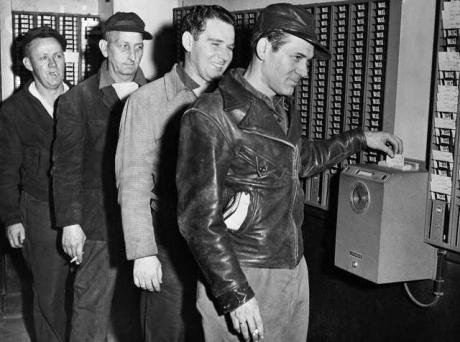
I stood behind him at the bank as he deposited a wad of the twenties into his account. I stood there with really nothing on my mind, thoughts of the day, plans for the weekend and such. Then it hit me. What was he thinking? Or more precisely what was he thinking about what the others about him? Given the apparent divide in this country concerning race and equality, I wondered what he thought about the older white man behind him.

The ability to practice mindfulness is to practice the ability to allow thoughts and curiosities to come into our mind and to not dismiss them immediately. I am constantly assessing my thoughts and feelings and equally, I tend to assess the actions and behaviors of those around me. Without hesitation, I always greet a stranger with a smile. It is often returned in equal. To me, it is important to create a connection with others. From the young woman behind the register to the police officer standing behind me in line, there is always an opportunity to create a conversation.

The conversation may only be a few sentences or develop into something further. But it would never happen without a beginning hello or a simple smile. Below are some simple practices to develop and maintain mindfulness in daily life:

  1. As I said in a previous post, a smile is worth your weight in gold. A simple smile is one of the most powerful tools to bring brightness into a person’s day (and your day).
  2. Watch the people around you, their behaviors, mannerisms, whether they are appearing to have a good day or not (another reason to smile). This practice gives insight into the world that is right in front of you. It brings your thoughts to the present. Try to be simply aware of the people, try not to judge. If someone is being rude, usually it is because they are having a bad day, or stuck in a life they cannot find a way out of. Considering this brings a presence of peacefulness within you and a deeper understanding of others and their personal struggles.
  3. Finding your breath (watch for another article detailing this practice). When you find yourself becoming anxious, upset or angry, find your breath. Usually, we forget to breathe in these moments. If you find yourself in a state of anxiety, realize your breath, is it shallow? Are you breathing only from you upper chest? If so, take a slow deep breath through your nose and expand your lungs and diaphragm (your abdomen should rise with a full breath). Then slowly breathe out through your mouth. Do this slowly and evenly and only a few times (2-3 times usually).
  4. Say hello using the name of the store clerk helping you, Say thank you, using their name. It is amazing how a person reacts when they are treated like a real individual. I think of the person working in the grocery store, or in the home improvement store. People come up and ask for help, or check out their groceries, and never say the name of the person helping them, It’s right on their nametag! Again it’s about creating connections and conversation.


Important Conversations

There are moments in the day that I get completely overwhelmed at where my life had taken me, I am amazed at how my thoughts, beliefs and knowledge has completely changed. Much of this change had occurred within the past year. Yes, this past year. See, I turned 60 years old. Have you ever asked what ‘over the hill’ means? Take your age and multiply it by two, if you believe you will be alive at that age (60×2= 120) then you aren’t over the hill yet… I am indeed, but science may still extend our lives past that age… quality of life is another matter.

So, my beliefs and thoughts changed. What was important to me before are just not that important anymore. What were these important things? They were mostly material. They were the fear of and desire for money, material wealth and the supposed happiness that happens from purchasing and owning them. I never make huge loads of money. Maybe it was my low-rent housing upbringing, maybe it was that the fear of succeeding far outweighed the desire to succeed?

Today that doesn’t seem to matter. Now at the last third of my life I find that relationships, memories and my contributions to life, to my daughters and family are much more important. It is now about those conversations that create change in a person, those conversations that bring depth and honesty to the ones we love. I watched a music video by Mike & the Mechanics titled In the Living Years. It always brought tears to my eyes and still does.

My mom and I had several memorable conversations. The last one I had with her was the closest to my heart. She was suffering from pancreatic cancer for which she had quickly succumb to, bless her soul in heaven. She was fearful of passing on and asked me if I believed she was going to heaven. She asked if I believe in heaven. I asked her to describe what heaven meant to her. She described a beautiful place where all her friends and loved ones that passed on had waited for her and she would experience happiness and joy.

I told her I believe that Heaven is exactly what she believed and that Heaven is what each of us believes it is. I explained to her that all the work and sacrifice she had experienced in this world guaranteed her a place in happiness. We talked about deep spiritual things and her love and hopes for my brothers and sisters. I knew it would be the last talk we would have. For that I am grateful to have the courage and opportunity to have that talk with her. Does the word courage surprise you? I believe that many people spend great amounts of energy in avoiding conversations like this. The fear of feeling such overwhelming emotions and to accept the inevitable loss of their loved one keeps them away from these moments that are so very important.

Today I sit here writing this with the hope that my daughters will find the conversations and the moments that bring lasting and loving memories. Life is full of memories waiting to happen. All we need to do is to keep our eyes and hearts open to the moments. They happen every day.

The Stone Cutter

There was once a stone cutter who was working on taking down a huge stone tower. Each day he would take his chisel and hammer and chip away at the stone. One day as he was working he heard horses and a carriage pass by on the road. It was the king and his guardsmen in all their splendor and glory.

The stone cutter thought to himself, I wish I was the king, I’d be the most powerful on this earth. With that statement he became the king. He enjoyed ruling over his people and riding in splendor on the roads as all feared and respected him. On one day as he road along the sun was beating down with fierce intensity. He was upset that he was so hot and could do little about it. He thought, if I was the sun, I would be the most powerful! I wish I was the sun. With that, he became the sun. He enjoyed beating down on the people below, burning their crops and making life miserable for those below him.

On one afternoon a cloud passed in front of him. He was angry for this intrusion. But for all his power and intensity, he could not move the cloud away. Again, he found a force greater than him. How I wish I was a cloud, I can even block the sun! And with that he became a big dark cloud. He rained down on the people below, washing away their crops and their homes. This lasted until a strong wind came by and pushed him away. Furious, he could not stay as much as he struggled to remain. How strong that wind is! I wish I was the wind. With that, he became the wind and wreaked havoc with the people below, blowing down everything he can.

But he came up against something he could not move, no matter how hard he blew. It was the stone tower, standing erect and strong on the ground below. Again he thought, something stronger and more powerful than me! I wish I was that tower. With that he became the tower. He withstood the wind, the rain, even the sun’s heat. Then one afternoon he heard a sound at his base. It was a chipping sound of a stone cutter…

Carrying the Past

Two men were walking on a trail when they came up to an old woman standing at the edge a river. She asked the men if they could help her across the river. One man looked to the other. They agreed to take turns in carrying her. One carried herr to the middle of the river and then passed her over to the other man. She was not a petite woman. It was a struggle for both of them.

On the other side the second man to carry her put her down gently. She thanked both men and walked on her way. As they walked, the first man to carry her began complaining of how heavy she was and what a chore it was. He said his back was aching. He complained for a good while before noticing his friend was not saying anything.

“Were you not struggling to carry her? Why are you not complaining about this?”

The first man looked at his friend and said: “when I came across the river, I put her down, it appears that you are still carrying her on your back…”

(this story is a variation on a Buddhist monk tale)


What has happened to conversation?

What has happened to conversation?

I am guilty of the new addiction that is affecting the world.

It’s not a new drug to put into our bodies, it is not a new casino.

It is the cell phone.

Almost all conversations are being held with these devices. Go to any restaurant and look at the tables that are occupied. How many cell phones are sitting next to the dishes? How many are actually in the person’s hand while they effectively ignore their dinning mates in favor of the latest Facebook post? Watch people walking down the street or standing at the train station. How many are buried face-deep in their cell phones?

We used to talk to each other. We were once able to look each other in the eye and have deep meaningful talks. Some of the deep questions we used to ask each other that brought out change and growth rarely happen today.

It’s the big question we used to ask each other, WHY or WHAT

When was the last time someone asked you?

Why do you work at your career,

What is your passion?

Be curious…

So many relationships just seem to coast along in occasional conversations with little substance and on text messages. Many times the deep and memorable conversations happen on a person’s deathbed.

So please, pick up your cell phone, call someone and ask them out for lunch, have a real conversation. Look them in the eye and connect. Ask why. These real conversations are where the memories are made. Not on a five inch screen inches away from your face.

Peace & Love to you.


How did I find mindfulness?

tea pot

Many, many years ago I was not the patient and peaceful person I am today. I was usually anxious and easily frustrated. Much of my early life was full of anger and anticipation. I drove my car like a mad man, full of rage and vengeance.  I spent many days and nights searching for the next excitement, the next rush. But, with all this anger and rage I was also looking for a balance with all this. It was quite tiring to live this way.

One day I met a woman, sadly today, I only remember her face. She was a school teacher. A very gentle and passionate soul was she. We did not last too long. My crazy intensity drove her away. On the last evening, before we parted ways, she wiped the tears from her eyes and told me she wished she could give me peace within my heart. I understood, but only at a superficial level. This gentle school teacher gave me one last gift.

I tried to refuse it, but she insisted. It was small, wrapped in simple blue paper with a red satin bow tired around it. She asked me to promise something. I say yes, I would promise. She then asked me to open the gift. It was a book. The Tao te Ching sat simple in my hand. I had heard of the book but never read it. She asked that I read it until I completely understood it. And then having completely understanding it, I was to give it to another soul that could use its wisdom.

I read that book front to back then back to front (each page is a chapter, 81 in total). It took me three years to begin to come to an understanding of what Lao Tzu (the author) wanted to convey. Its simplicity baffled me. It was the beginning of mindfulness.  At this time of my life, I was in the warm embrace of the group Alcoholics Anonymous (AA). I needed to have a sense of belonging and before joining AA I was enjoying playing drums with other rock musicians and drinking loads of alcohol and smoking even greater loads of weed. AA brought a new and healthier family to my life.

I had a sponsor while in AA. He was a hard ass. I needed a hard ass! One day after hearing my misery over wanting to go back to the crazy using life, he turned to me and said: “there is a saying in AA; Think, Think, Think.” I told him I knew that saying. He said: “Don’t, Don’t, Don’t. You think too much. I want you to do something. It is simple.”

I was curious. “I want you to go somewhere peaceful and sit there until you stop thinking.” He was right, simple. I soon learned the difference between simple and easy. I found a beautiful and peaceful spot at Schoodic Point in Winter Harbor, Maine. The first day I sat on the smooth granite rock, I lasted an entire 15 minutes. Six months later I went to the same spot. A stone totem I had created one day was still there. I sat down and stopped thinking. I completely stopped thinking for hours. I watched the sunset.

At that moment my life changed. My viewpoint on my life changed, it broadened. The Tao te Ching then made perfect sense.

This has become very important for me because it has brought me peace and confidence in my life. I have found a sense of purpose and a desire to help others find mindfulness.

My next journey was to bring this new mindfulness to my everyday life. For this I developed strategies on how to create mindfulness in the moment. If I change the name from mindfulness to curiosity, what does that do for you?

Curiosity is a form of mindfulness. To be curious you simply become mindful.

I first became mindful of myself and of my routine. The curiosity in me questioned my daily actions. I will give you an example; I disliked showering, but could not understand why. I became curious of my actions. When I stood in the shower I felt an immediate sense of depression and looking further within, I found fear. It then hit me like a ton of bricks. I had a traumatic experience as a child that involved being in the shower. I became fearful when standing facing the shower when washing my hair. It was intense. I then turned around and washed my hair with the water hitting the back of my head. Fear was gone, problem solved, with curiosity.

So, finding mindfulness while in the world is a possible thing!

You can spend hours, days even months meditating, or spending time at a spiritual retreat. Those are great for the time you are there. What happens when we are in everyday life? How do we act when someone is rude? How do we find that peacefulness we found in solitary meditation in the moments of frustration from others?


  1. Finding yourself frustrated in the moment. Stop what you are doing. If you are in a store, stop walking; stop shopping just for a moment. Refocus yourself. Turn on your curiosity both inward and outward. Become curious of what is frustrating you. Find your breath and become mindful of it.
  2. Become curious of your surroundings. Become curious of the people around you. As a little personal curiosity, I look around me to find the people with smiles on their faces. Are they alone shopping? Are they with a friend or a child? I do this because seeing a smile in another person, creates a happiness in yourself.

“Sometimes your joy is the source of your smile, but sometimes your smile can be the source of your joy.” ~Thich Nhat Hanh


  1. Following on number 2, smiling is one of the greatest anti-depressants we have at our disposal. And the best part, it is free!

Smiling activates the release of neuropeptides which fights off stress. Neuropeptides are tiny molecules that allow our neurons to communicate. They facilitate messaging to our body when we are happy, sad, angry, depressed or excited. The feel good neurotransmitters dopamine, endorphins and serotonin are all released when a smile flashes across your face as well. When you feel a negative emotion, try on a smile. A saying from AA states: fake it until you make it. Smiling, even forcing it, causes that biological change described above.


  1. Mindfulness and depression. An article that shows the amazing effect mindfulness has on depression:

https://www.ncbi.nlm.nih.gov/pmc/articles/PMC3044190/

  1. A free research paper on brain health with mindfulness:

https://www.ncbi.nlm.nih.gov/pmc/articles/PMC3004979/


fostering mindfulness in your life brings a new life for you. Mindfulness creates focus, it creates happiness and intense understanding both of ourselves and the world around us. If something bothers you, ask why and be curious. You will be a better person for it!

Enjoy these great meditation books by Alfred James:

http://bd9bazh9qznglndh0-x–awjo3.hop.clickbank.net/

A Purpose in Life

40 hours

I grew up in a low income housing project.

Life was not easy. My mom was divorced and I saw my father for only a few years before he disappeared. Like I said, life was not easy.

The sense of purpose I had was to just survive. I did graduate high school, thanks totally to my mom’s insistence. I was born an artist. I was able to draw and paint from an early age and that probably saved me from all kinds of terror from the kids I associated with. Much of my life revolved on being an artist, at least in my head. I spent much of my young work life in factories and warehouses. Not the life of an artist. But the family (and I) had to eat.

I was seen by my family as a wandering and lost soul. No focus, no career goals. After graduating high school I was talked into joining the U.S. Air Force. This was my first real opportunity at a career. But not as an artist, even though the recruiter promised I would work in the Air Force Art Department.

I spent one month in the service. After receiving an injection during a medical appointment with the other recruits, I became violently ill for three days. I was then systematically released from my contract with Uncle Sam and returned home to more factory and warehouse work.

My sense of purpose was at an all-time low.  While in high school I taught myself how to play a drum set. I played in a few bands and always had the drums as a source of therapy and escape. I knew that being an artist or a drummer was not a great way of making money. And it was difficult to choose which was more important. Later I would realize both had their special places in my life.

Life took on a new sense of purpose after I married a girl I had tried to start a band with. But I still was working different low-end jobs to pay bills. It wasn’t until after I made a royal mess of my marriage and ended up in divorce, that I found psychology and ended up graduating with a Master’s in the field. Life was looking rosy. I felt as I had found my sense of purpose. This lasted for over 20 years and still is a larger focus in my life.

But something changed recently. My health took a huge hit with a diagnosis of Lyme disease and finding that I could not keep a job for more than one year. I needed help and I needed to re-evaluate myself and my purpose in life.

Finding my creativity again through writing and psychology, and creating a way to offer it to the world has become my purpose.

So, what is our life’s purpose? We have these moments in our lives where we get the chance to reinvent ourselves. Most of us push that moment aside and trudge on with our status quo, never really happy, never dissatisfied enough to do anything about it.

Here in lies the truth to the question “What is my Purpose in Life?” We exist for an indeterminate period of time on this planet. During that time we engage in life. Some of the stuff we engage in is very important, like developing relationships, raising children. Some of them are unimportant, like going to a job we terribly despise, or watching the latest sitcoms. Then there are important times that give our lives meaning and happiness. The unimportant stuff basically just kills time.

So when we say, “What is my purpose in life?” what we are actually asking is: “What can I do with my time here to make it important, to make it mean something?”

The most common question I get from clients is: “what they should do with my life, what is my life purpose.” This is an impossible question to answer. I usually begin asking a lot of questions and in the end they usually find their own answers.

I have put together a series of questions I have used in counseling to help you figure out, for yourself, what is important to you and what can create a deeper meaning in your life.

  1. What kind of sacrifice are you willing to make to follow through and achieve your goal?

If you want to be an entrepreneur, but you have trouble handling failure, then you’re not going to make it very far. If you want to be a professional artist or musician, but you aren’t willing to see your work rejected thousands of times, then you are finished before you really begin.

  1. What inner secret goal have you harbored for years or even decades that you keep telling yourself “I’ll start it next week, next year, etc”?

We all have that dream. Maybe it was fostered in childhood. Maybe it came out of an adolescent dream while smoking some weed at a friend’s house. How many of those dreams did you pursue? How many did you give up on before they even left your head?

  1. How are you with making a complete and utter fool of yourself?

Before you are ever good at something,, you must first suck at something. This is quite obvious, correct? So, to be really bad at something and have no clue as to what you are doing, you must embarrass yourself, and repeatedly. Most of us try to avoid embarrassing ourselves, namely because our fragile egos can’t handle it. So, embrace your embarrassment. Laugh at yourself! Feeling completely foolish is part of the path to achieving something important and something more meaningful. The more a major life change or decision frightens you; chances are, the more you need to be experiencing it.

  1. If you had to leave your house all day, every single day, where would you go, and how would you spend your time?

Complacency is our enemy. We get stuck in our daily routines. We find or create distractions. The couch has that comfortable sweet spot. The Corona is cold and the chips are salty. And the same old, same old.

This is indeed, a quite dilemma.

What most of us do not understand is that our passions in life are a result of our direct action, not the cause of it.

Discover what you’re passionate about in life and what matters to you; it is a long trial-and-error process. We do not know exactly how we feel about an activity until we actually experience and put some effort into it.

So ask yourself, if you to leave your house every day, how would you choose to spend your time?

  1. How do you want your children to describe you when they talk to their grandchildren?

Can you describe what your legacy will be? What are the stories about you your children are going to tell their kids and grandkids when you’re gone? Is there anything of substance for them to say at all about you? If not, what would you like them to say? How can you start writing your story today?

When we feel like we have no sense of direction, no purpose in our lives, it’s because we do not know what’s important to us, and we haven’t identified our values.

Discovering our purpose in life is essentially finding those one or two things in life that are larger than ourselves.

To find them we must get off our respective couches and take the time to think beyond ourselves, to think beyond our personal needs for comfort and immediate happiness, and ironically, to imagine a world beyond ourselves.

intention


img_20161112_143253

noun  in·ten·tion \in-ˈten(t)-shən\

  1. an act or instance of determining mentally upon some action or result.
  2. the end or object intended; purpose.

I sat in my car, having just pulled into the Trader Joe’s parking lot. I just needed to go in to pick up a few things. Sitting there I weighed my emotions and what thoughts I was having. I understood that how I was feeling and what I was thinking would determine my experience while in the store.

I could walk in with the basic intention of picking up the items I needed, make some inconsequential small talk with the check-out person and leave. Or, I could set my intention to have a more pleasant experience.

How do I do this?

How can changing my intention change my experience in my daily life?

I can talk about meditative practices that would bring about peace and tranquility to those that practice daily. I can talk about holistic retreats and monasteries that foster tranquility and reverence for life.

But I’m not going to.

I’m back sitting in my car, some metal music playing on the radio and I’m feeling a bit indifferent. So, there is a simple practice that always turns things around for me. There is something that I do when I am feeling indifferent, or sad, or even angry, that changes my outlook and then changes my intention.

I smile.

First internally, I’m still sitting in the car looking at the shoppers walking into Trader Joe’s. Some have their head down, a scowl on their face. Some walk in with what appears to be a purpose similar to what I described earlier; get in, and get out as quickly as possible.

So, I smile and open the door to my car and walk into the store. The smile never leaves my face. It’s a subtle smile, not the shit-eaten grin of a slightly deranged person. Each person I make eye contact with I smile. Most smile back. Some even say hello, or even engage in small-talk with me.

So, what is the biology behind a smile?

A smile begins in our sensory corridors. When we hear a whispered kind word, our eyes notice an old friend at the store. Or our hand feels the warmth of another’s hand, this emotional data funnels to the brain. It leaves the left anterior temporal region, then rises to the surface of the face, where two muscles, are ordered to action: Residing in the cheek is The zygomatic major, which tugs the lips upward, and encircling the eye socket is the orbicularis oculi, which squeezes the outside corners creating laugh lines or crow’s feet on our face. The entire event is very brief — usually lasting from two-thirds of a second to four seconds — and those who witness it often respond by mirroring the action, and smiling back.

So the unintentional display of a smile is contagious. When we see another person smile, we often cannot help but smile back. So what if we create an intentional smile. It may start out as a fake representation. Maybe our moods are not the happiest sitting there in the parking lot. Maybe we had a bad day at work, or got into a fight with a loved one.

This is where the law of intention comes into play;

“Inherent in every intention and desire is the mechanics for its fulfillment . . . intention and desire in the field of pure potentiality have infinite organizing power. And when we introduce an intention in the fertile ground of pure potentiality, we put this infinite organizing power to work for us. __ Depak Chopra.

An amazing thing happens when we choose to smile even when we really aren’t feeling it. The moment another person sees you smile at them, they invariably smile back. That instant and often involuntary response changes your thought pattern. Someone smiled at you! Your smile stays on your face a few seconds more. Maybe someone else smiles at you again…

What that little gesture has on the small society inside of that Trader Joe’s is nothing short of a miracle. Someone else had a bad day. You chose to enter the store with a smile on your face. The person witnesses that and smiles back. Quite possibly this small and seemingly insignificant event could change how they feel and view their day from then on. Now, multiply this by all the people they meet.

I was told something many decades ago.

We have the opportunity to change the world at least once every day.

What if that smile was a singular event that carried to hundreds of people, even thousands of people, effectively changing their view of life and themselves?

We do not often see the results of our actions, of our emotions on others.

But a smile.

A smile is free and priceless.

Try one on for size next time you are sitting in the car in the parking lot. Or anywhere else.


Stuck

IMAG0477

It appears that you are stuck.

You have said on several occasions that your life is not going the way you want. You say you’re stifled in the life you have created. What I see is that your creativity and passion have taken a back seat to the domestic day-to-day adventure you find yourself in. When was the last time you felt complete and whole when you felt like you were expressing your true self?

I can see the poems lying dormant behind your eyes. I can see the fire that once lit your passions turning to a whisper of a flame. Where did it all change? Where did you exchange your love and passion for mediocrity and the elusive domestic bliss? From where I sit I see you turning into yourself like a hermit crab retreating into its shell. So, I have four simple questions for you.

One: Can you describe the passion you have still burning within you?

Two: What would it take for you to return back to your free and creative self, where you felt joy and companionship from the world?

Three: Do you really want to?

Four: if yes, are you willing to take a chance and step out of the forest you have wandered into and find that road you originally were on?

There is a map that can help you to your road.

  1. Awaken your conscious by starting a journal and creating a blog. This is effective in taking you out of your own head by putting your thoughts and feelings onto paper (or screen), thus bringing a separate life to them outside of your head.
  2. Identify your thoughts from the thoughts of others. For many people life is usually easy coast through when you’re on autopilot; we are given a rudimentary road map for how life is supposed to work.  We begin by going to school, then graduate and get a job, followed by getting married and having 2.5 children. The American Dream. For many, this is good enough. but it doesn’t allow room for you and your expressions that are now dormant under a basket of dirty clothes and a sink of dishes. So sit down with yourself. And create a timeline from when you were a child until this very moment. Be honest with yourself. At the end of your timeline, identify a few beliefs that aren’t based on your own logic, but are based on what you’ve been told.  Now, how have they impacted you?

    Feel free to think more basic. Do you actually agree with your parents’ or your spouse’s political or religious affiliations? Is having a career really the most important thing to you?  If the answer is no, great! There is absolutely no problem with not molding yourself to others’ definition of life, if they fit the true self you see in the mirror, then you are good. Now all you have to do is unlearn and then relearn the beliefs you have called to question. Only this time, relearn based on what your heart says to you.

  3. Organize your life. You may find that having your external world in order will help expedite further the process of rebuilding your identity. So clean your house. Do your work before it is due. Resolve any personal conflicts with friends. Be honest and caring in your conversations, this, after all, is the foundation for friendship. With everything external organized and sorted out, this will open up your availability to focus on your deeper self.
  4. Rely on yourself. Confidence is at the heart of finding your true self. If you don’t have a strong sense of self-worth, you will listen to what others have to say and be swayed by their beliefs on what is right and popular. Learn to begin to believe in yourself and trust your own thoughts feelings. Remember, be patient with yourself, be kind with yourself and be confident in your abilities. Growth will come with time and honest effort.

    Trust your own judgment and decision-making processes, with all its mistakes. We all make mistakes, but through our errors, we find growth, learning, and we begin to find our true selves. Start taking responsibility for your budgeting, household matters, and planning about yours and your family’s  future. Things don’t always get sorted out by themselves. Take responsibility and find that road you once walked with self-reliance and self-determination, and no longer be influenced by the winds of fate.

  5. Find Alone Time. Give yourself some time and space to get away from the external world with all of its complications, noises, and demands. Take some time to go for a long walk and think. Plant yourself on a park bench and look, this is the essence of practicing Mindfulness. Whatever you do, remove anything that distracts you from contemplating your life and where you want the road to take you.
  6. Find your passion. What was it that drove you all those years ago? Does it move you even today? Search deep for what really moves you and what you truly want to be involved in. We are not entirely solitary creatures. We crave community and purpose within that community. Through your journal and in your meditation, find what you want to foster on your journey down your road.


THE STAGES OF LOVE

love-photo


Do not think that love in order to be genuine has to be extraordinary. What we need is to love without getting tired. Be faithful in small things because it is in them that your strength lies.

― Mother Teresa


Love, as in romantic love, as in the attraction and courtship of another. Millions of books and articles have spoken volumes on the subject. When looked at in the bright light of day, is so very simple. So simple in fact, that, we have to complicate it in a vain attempt to understand its simplicity.

Is it portrayed in black and white? Is it pictured in various shades of grey? It is, first and foremost the supreme opportunity to learn to step outside of ourselves and give that love and attention to another person. It is in fact, the understanding that we are not solitary creatures.

We crave connection; we desire the comfort of another’s hand in ours. We crave the soft warm kiss and the immeasurable warmth of a deeply felt hug. Connection.

A friend and mentor once explained the stages of love to me and where most couples fail. Here are those stages and a description of each:

Stage 1: Attraction and Romantic Love.

It is that point where we meet that special person. Maybe at a bar, or a party, at work, or bumping into their carriage at the supermarket. It is what Italians call ‘the Thunderbolt.’ It’s those Crazy Mad feelings of desperate need to be with that person every moment of every day. You cannot get enough of each other! They have no flaws, every funny idiosyncrasy is cute.

Stage 2: Love.

You’ve been together a while, life is good. Dinner dates, movies, long romantic strolls on the boardwalk. You are finding out about each other.  Hopes and dreams coalesce. You spend weekends together planning the big day! And it happens, the dress, the tux and the rings. Everything you have dreamed is coming into fruition. The romantic feelings are going strong. Setting up house and settling in is everything you have dreamed. A two-car garage and gourmet kitchen are the icing on your life cake.

Stage 3: Marriage.

You’ve been together for a few years now. You’re settled into your house and life. You drop your partner off at the train station then take that 30-minute drive to work. Weekends are filled with shopping at IKEA and Bed Bath & Beyond. Friends come over for dinner parties and you can’t imagine life getting any better.

Stage 4: WORK

This is the stage where many marriages fail.

One of my most favorite sayings is: Life happens while you’re busy planning for it.

Small things creep into your life. The job isn’t as glamorous and exciting as when you first started. Your partner (and you) has settled into those comfortable clothes (no need to dress sexy). One day she looks at you and you know something has changed; something miraculous and life changing has occurred. She stands there with a white plastic strip with a blue plus sign on one end of it. Life has indeed changed. (more on this singular moment later).

And sadly, for a great deal of couples, the birth of a child spells the end of the relationship. (it did for me).

Unprepared and unequipped for the major transition that is occurring, many couples find themselves divided. She, as a new mom spends every amount of her energy on this amazing bundle of joy. Romance has taken a back seat. You, the unprepared new father, stand there in the living room with the new paypen, and new toys and the woman that had showered you with so much attention, trying to figure what the hell happened?

This is the turning point. This is (excuse my candidness) where we separate the men from the boys. Life has indeed changed. There is a key element that goes missing at this stage of the relationship. It is COMMUNICATION. Most couples just stop talking. He has his idea of what the relationship should be, and she has hers. They are polar opposites. He remembers the fun and the romance. He longs for long drives in the country and romantic evenings. But these are few and far between. Bringing a child into the relationship is an amazing time. It is a time of reawakening, a time of soul searching and of truly reinventing ourselves. But many men can’t see past the past.

Picture it, you are at work. An attractive woman starts there and you work together. Some late nights, that necessary dinner together and things begin to heat up. She may also be married, or not. Everything that you had in your relationship in the past is right in front of you again. The attraction, the romance, your ‘little brain’ is screaming!!!

Now one of two things can happen later.

Understanding who is at home and the importance of what all those years mean, a man can politely decline the advancements. But sadly, many men succumb to the temptation.

Now to be perfectly clear. The ‘other’ woman is not the bad person in this scenario. She carries her own sorrows and pain of lost relationship. She is looking for understanding and love. Like you, the man, she is disillusioned about love.

I return to that critical word: COMMUNICATION.

It is the singular most important skill and opportunity a couple has to continue to build their relationship. Sometimes it requires a professional third party to facilitate the communication.

This is where the opportunity is lost for many couples. As I stated at the beginning, this is the supreme opportunity to learn to step outside ourselves and look at the love and person before we look at ourselves.

Next time you are at the supermarket and you see an elderly couple holding hands and smiling at each other. Stand there and think for a moment. They had passed through the stages of love. No, it wasn’t easy, but it was worth it!